

If someone told you they were pregnant with a set of twins who had two different fathers, you'd probably think they're pulling your leg.
While it might sound like a made-up story, giving birth to fraternal twins who each have a different father is actually biologically possible.
It's quite rare, but it does happen. If you're wondering how, read on.
Hyperovulation and heteropaternal superfecundation
It starts with hyperovulation, which occurs when more than one egg matures and is released in a particular month. When those eggs both get fertilized by separate sperm, you become pregnant with fraternal twins.
And when those separate sperm come from separate sexual partners within a short window, you become pregnant with fraternal twins who have different fathers.
This phenomenon is known as heteropaternal superfecundation (when the twins have the same father, it's called monopaternal superfecundation.
According to Science Direct, heteropaternal superfecundation "is a phenomenon that occurs as a result of fertilization of two eggs in the same cycle of ovulation, either during the same sexual intercourse when ovulations are simultaneous or, with intervals between three and nine days when ovulations are discordant, at the same menstrual cycle, but containing sperm from different men, resulting in fraternal or dizygotic twins who, unlike full siblings that share about 50 percent of their genome, only share an average of 25 percent of it."
Genetically, a set of twins with different fathers are maternal half-siblings.
From half-siblings to half-identical twins
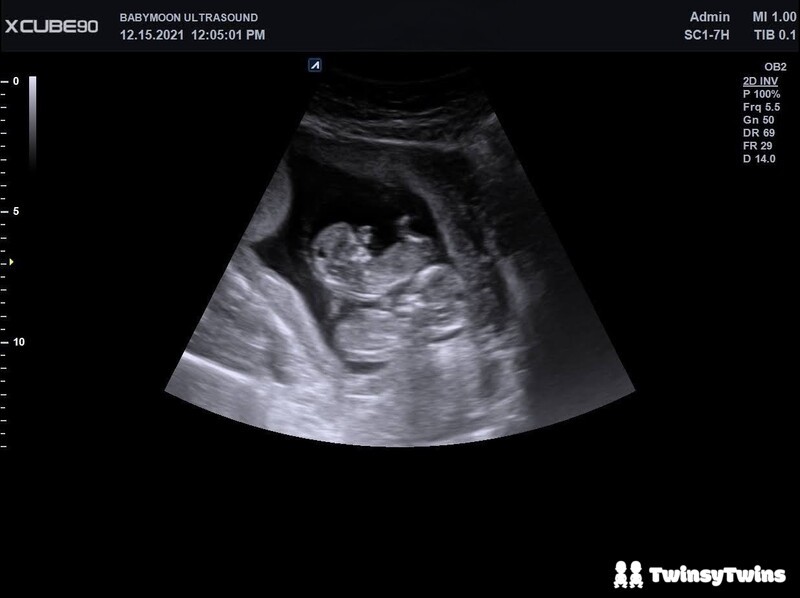
If you thought it was interesting that it's possible to have a set of twins who are technically half-siblings, consider this: It's also possible to have twins who are only half-identical.
Not "fraternal." Not fully-identical. Half-identical.
The difference here is more substantial than you might think. Half-identical twins, also called polar body twins, share about 75 percent of their DNA. This means there are fewer genetic markers shared than with identical twins, but more than with fraternal twins.
This type of twins occurs when a single egg divides (which is a normal part of pregnancy) to create a large egg cell and a tiny polar body, but is then fertilized by two sperm (a not-so-normal part of pregnancy).
This results in both the egg AND its polar body being fertilized. This fascinating phenomenon gives them the same genes from their mother but different genes from their father.
Polar body twins are incredibly rare—so rare, in fact, that there's limited research on this topic, and there are actually no definitive tests to confirm this type of twins.
The chance of two different sperm fertilizing two separate egg parts from the same ovulation is improbable. Normally, a polar body doesn't survive the pregnancy because it needs to survive and act like a second egg (which is very unlikely).
But, sometimes, the polar body can be strong enough to continue growing and develop into a viable fetus that completes a successful gestation alongside its twin.
Some people feel this explains situations where fraternal twins look surprisingly similar to one another.
From incredibly rare to exceptionally rare

Polar body twins, or half-identical twins, are rare. But this next type of twins is even more rare.
Enter: Sesquizygotic, or semi-identical, twins.
You're probably saying, "The last kind was 'half-identical,' isn't 'semi-identical' the same?"
And the answer is, respectfully, "No, no it is not."
Half-identical twins differ from semi-identical twins.
With polar body twins, a single egg divides and then gets fertilized. With semi-identical twins, a single egg gets fertilized by two different sperm at almost the same time and then divides afterward.
So, sesquizygotic twins are created from a cell with three sets of chromosomes (sharing 100 percent of the maternal DNA, but only about 50 percent of the paternal DNA from each separate sperm) that then divides and develops into two separate embryos.
This is certainly a unique genetic situation, and the end result is semi-identical twins.
This is certainly a unique genetic situation, and the end result is semi-identical twins.
In these rare cases (there are only two reported cases—ever), the twins share a placenta but can then turn out to be two different sexes, which is impossible with a typical set of identical twins.
Stranger than fiction
Our bodies are capable of incredible things. Creating, growing, and bringing multiple lives into this world at the same time is just the beginning.
Finding out you can create multiple miracles from a single ovulation and end up with twins who each have a different father, or who are half-identical, or who are, even more rarely, semi-identical is almost stranger than fiction.
Who knew such fascinating biological plot twists were possible?
Do you know any twins with different paternal origins? Do you have half-identical twins or semi-identical twins? Let us know in the Comments section below or connect with us on Instagram to share your thoughts!
Read more

New Partnership Advocates for Better Mental Health Support for New Parents
No matter how you look at it, parenting is stressful. Beyond keeping one or more tiny humans alive, the extreme sleep deprivation and financial strain of keeping multiple mouths fed and the associated butts clean and dry don't make anything easier. Add to that the potential trauma that can come with a multiple-birth delivery and the relationship strain that comes over time with never...

10 Weird Twin Pregnancy Symptoms You’ll Wish Other Parents Warned You About
You've probably heard of the classic pregnancy signs: nausea and vomiting, tender and/or swollen breasts, extreme fatigue. As these symptoms linger, you start to wonder what's up with your body, and then you realize your period is late, so you decide to take a test. Aside from the obvious pregnancy symptoms you've probably heard about, there are less obvious signs you might experience...

Predicting Preeclampsia: New Prenatal Screening System is a Game-Changer
Preeclampsia is a serious condition that affects between two and four percent of singleton pregnancies and between nine and 11 percent of twin pregnancies. This means a twin pregnancy presents a risk of developing preeclampsia that is approximately two to three times higher than a single-baby pregnancy. The likelihood of Preeclampsia developing is nine to 10 times more likely at...

What is a Fused Placenta & Do I Need to be Worried About It?
When you're pregnant, a lot of fun—and interesting—things can happen to your body. When you're pregnant with twins, there are even more interesting things that can happen to your body. Like finding out that the two placentas you saw on an early ultrasound have fused together and become one organ. But, what exactly is a fused placenta, anyway? And is it a cause for concern? Let's take...