

We may earn a commission for purchases using our links. Learn more.
In Canada and the United States, November is National Radon Action Month, which aims to raise awareness of the health risks of radon gas and encourages people to test the levels in their homes.
What is radon?
Radon is a naturally occurring radioactive gas that's found in the environment, including in rocks, soil, and groundwater.
The gas is formed as uranium breaks down within soil and rock.
You might be wondering, if it's found outdoors, why do I need to test my home for it?
For three reasons:
- Because your home is the most likely place you'll be exposed to radon;
- Because radon is the leading cause of lung cancer among non-smokers; and
- Because radon can seep into buildings through their foundations and then get trapped indoors, which can be dangerous if the levels within your home are too high.
But if you don't actively test for radon, you won't know it's there because it's a colorless and odorless gas. You can't see. You can't smell it.
But if you don't actively test for radon, you won't know it's there because it's a colorless and odorless gas. You can't see. You can't smell it.
Estimates from the United States Environmental Protection Agency indicate that one out of every 15 homes in America has radon levels that exceed the recommended safety level.
In Canada, one in six homes tested in Western Canada had dangerously high levels of radon gas.
Health Canada recommends taking action to reduce indoor radon when the levels exceed 200 Bq/m³ (becquerels per cubic meter). In the United States, the EPA action level is 4 pCi/L (picocuries per liter).
Now is the best time of year to test the radon levels in your home.
Now is the best time of year to test the radon levels in your home.
Why?
Because the colder weather that comes with the end of fall / the beginning of winter calls for sealed windows, giving you a more accurate reading of the true radon levels in your home.
Are kids and preemies at a higher risk from radon exposure?

While studies on this topic are limited, the general concensus is that children and infants could be at a higher risk of increased exposure to radon compared to adults.
This is because they have a faster respiratory rate, breathing two to three times more quickly than adults and, therefore, inhaling more air and radioactive particles relative to their body weight.
According to the U.S. Centers for Disease Control & Prevention, "children may have higher doses (amount breathed in) of radon than adults even when exposed to the same radon levels for the same amount of time. This is because children have faster breathing rates and different lung shapes and sizes."
In addition, their organs are developing thanks to rapidly dividing cells; this is good. But it also makes DNA more vulnerable to radiation-induced mutations that replicate as a child grows.
Twins or other children who are born prematurely may be even more vulnerable to increased exposure to radon because they often have sensitive lungs from being born before their alveoli and bronchial linings were fully developed.
This leaves their epithelial tissue, which lines the respiratory tract, more susceptile to cellular injury.
Children who are born prematurely are also prone to chronic respiratory conditions, like bronchopulmonary dysplasia, and they have a higher risk of adverse outcomes if they become infected with Respiratory Syncytial Virus.
They may also have ventilator trauma that caused compromised pulmonary repair mechanisms or altered breathing patterns.
All of these things impact a preemie's lungs and their ability to breathe, radon exposure included.
While radon doesn't cause immediate, acute symptoms, it delivers alpha radiation continuously over the long-term to developing lung tissue.
A Canada-wide study on radon that aims to evict radon from homes says, "infants and children are particularly sensitive to the negative health effects of the alpha particle radiation emitted by radon gas, and special measures should be taken to reduce their exposure as much as possible."
Tips for testing radon levels in your home
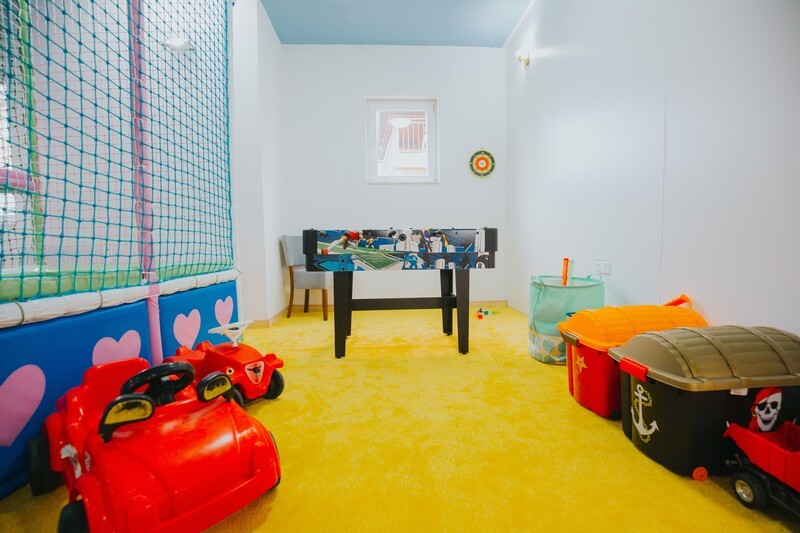
In general, radon levels tend to be higher the closer you are to the floor compared to levels nearer the ceiling.
This is because radon enters your home from slab cracks, foundation joints, sumps, and floor drains at the ground level. It's also because the gas is heavier than oxygen; though, everyday airflow and heating and cooling systems prevent radon from staying solely at floor level and allow it to mix throughout the room.
Because babies and toddlers spend most of their time indoors (where radon levels can concentrate) close to floor level, and because twins who were born prematurely often have still developing or sensitive lungs, testing the radon levels in your home is one of the smartest preventative steps that parents of multiples can take.
Long-term tests that can track levels over a timeline of three months or longer (ideally, during cooler months when windows stay shut) provide a more reliable annual average than short-term tests.
The good news is that at-home testing can be done quickly and continuously if you get a detector that can monitor your indoor air quality.
Here are three at-home detectors to help monitor radon levels in your home
TwinsyTwins Shop
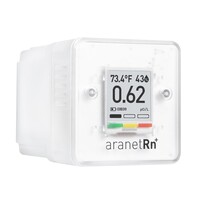
Aranet Radon Plus Home Radon Detector
Wireless E-Ink Home Radon & Air Quality Monitor
Designed for continuous indoor air monitoring, this wireless detector provides fast, 10-minute radon level updates alongside real-time temperature, relative humidity, and atmospheric pressure readings on a high-contrast E-ink screen. Color-coded visual indicators make it easy to check safety thresholds at a glance without opening an app, while Bluetooth connectivity with the Aranet Home mobile app unlocks historical logs and trend tracking. Powered by two standard AA batteries that last up to seven years, the compact unit works anywhere in the house without cords or constant recharging.
TwinsyTwins Shop
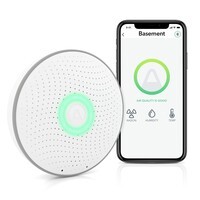
Airthings 2950 Wave Radon Smart Detector
Smart Battery-Powered Radon, Humidity & Temperature Monitor
Built for continuous year-round indoor monitoring without lab fees or wiring, this battery-powered smart detector tracks radon gas alongside room temperature and relative humidity. Waving a hand in front of the device illuminates a color-coded visual indicator ring for quick status checks, while Bluetooth and SmartLink connectivity sync detailed daily, weekly, monthly, and yearly graphs to the free Airthings app. It runs on two AA batteries and integrates with Alexa, Google Assistant, and the Airthings Hub for remote 24/7 access.
TwinsyTwins Shop
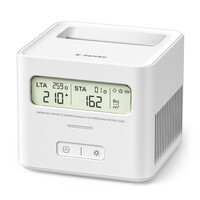
X-Sense Battery-Powered Home Radon Detector
Offline Battery-Powered Home Radon Monitor
Designed for simple, subscription-free indoor air monitoring, this 100 percent offline radon detector requires no Wi-Fi, app setup, nor recurring lab fees. Its clear backlit LCD displays both cumulative short-term (1-, 7-, 30-, and 90-day) and long-term radon averages in either pCi/L or Bq/m³, delivering initial readings within 24 hours and up to 95 percent accuracy after seven days. Powered by AA batteries for up to two years of silent operation, the compact unit includes a one-touch reset button, so you can easily move it from room to room.
When setting up your at-home radon monitoring device, set it up so that it can measure levels in an area where someone spends at least four hours a day (usually, your basement or your main floor).
You want the monitor to be off of the floor level (ideally, on a shelf or table) and away from drafts, vents, outer walls, and sources of high heat or humidity.
If you discover that the radon levels in your home are elevated, there are steps you can take to lower the levels, which typically involve bringing certified radon mitigation professionals into your home to assess the situation and install a sub-slab depressurization system, which has a vent pipe and fan that draw gas from beneath the foundation and exhaust it outdoors).
Then, the radon levels are re-tested afterward to confirm that the levels have dropped to an acceptable level.
Have you ever tested the radon levels in your home? Were they high or within regular range? Let us know in the Comments section below or connect with us on Instagram to share your thoughts!
Read more

Why Premature Babies Face Greater RSV Risks: What Twin Parents Need to Know
Like clockwork, flu and RSV seasons have arrived. They'll continue to run rampant from late fall through early spring. Some respiratory viruses even continue circulating into May, but the worst of these viruses peak during the winter months. If your babies were born prematurely...they're at a higher risk of adverse outcomes from respiratory illnesses. If your babies were born...

Corneas, Curves & Preemies: The Link Between Early Delivery & Astigmatism
Eyesight is a precious thing. So are premature babies. Did you know that prematurity can impact the long-term vision health of your babies? About 60 percent of twins—and the vast majority of higher-order multiples–are born early, before they're finished developing in the womb. If your babies need to spend time in the neonatal intensive care unit (NICU), healthcare professionals help...

New Baby Health & Safety Kit Helps Parents Track Their Babies’ Health
When you have children, one of the things that's always top-of-mind for a parent is keeping their kids safe. And when you're juggling taking care of two sick babies at once, one of the things that's always top-of-mind is how you can get them feeling better as quickly as you can. One baby care company is making it easier to monitor your little ones when they're feeling under the...

Here’s Looking at You Kid: Why Vision Monitoring of Preemies is Paramount
May is Vision Health Awareness Month. It's important to keep an eye (pun very much intended) on your children's eye health all-year-round. But proactive monitoring of your twin's vision is paramount, especially if they were born premature (before 36 weeks). This is because twins are at a higher risk for vision problems. This is because twins are at a higher risk for vision...