

May is Vision Health Awareness Month.
It's important to keep an eye (pun very much intended) on your children's eye health all-year-round. But proactive monitoring of your twin's vision is paramount, especially if they were born premature (before 36 weeks).
This is because twins are at a higher risk for vision problems.
This is because twins are at a higher risk for vision problems. Factors contributing to this elevated risk include higher rates of premature birth, low birth weight, and complications during pregnancy.
Genetics certainly play a role in your children's eye health, so twins tend to share the same inherited risks for nearsightedness or farsightedness (and same goes for eye diseases like glaucoma).
But the higher risk for non-inherited vision problems, like amblyopia (lazy eye) or strabismus (crossed eyes), comes from their development during a twin pregnancy and the likelihood of being born earlier and / or with a lower birth weight than a single-baby pregnancy.
Eye development in the womb
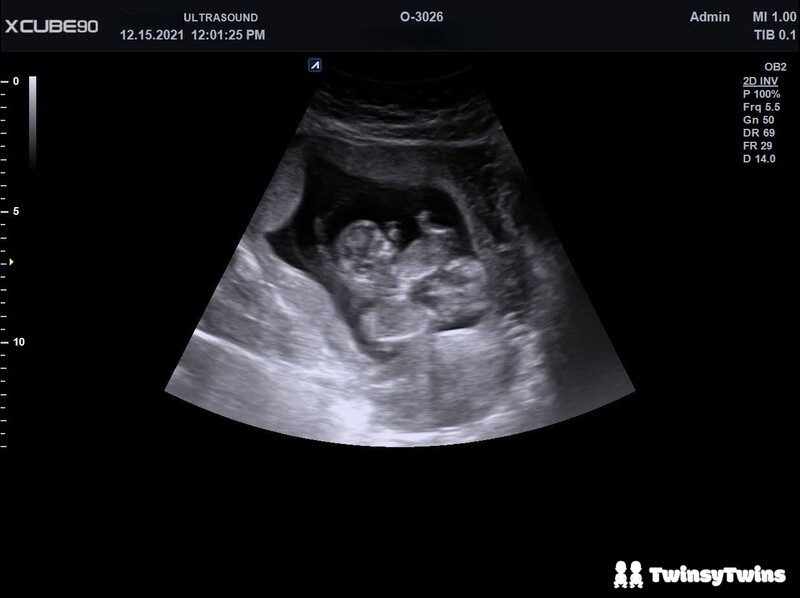
In the womb, development of your babies' eyes begins around six weeks' gestation, when they emerge as little protrusions outside of the brain.
Around 10 weeks, the eyes' basic structures, like the cornea, the iris, and the lens, are all established. At this point, the eyelids form and then they fuse shut for many months.
By 16 to 24 weeks along, the eyes are fully formed but they still stay shut at this point. Around 22 to 24 weeks, they can begin to sense bright light. At 27 or 28 weeks along, your babies can open their eyelids and blink. They can also detect light and shadows at this point.
Between 30 and 34 weeks along, your babies' pupils can contract and dilate in response to changes in light, and by 36 weeks, the eyes are considered structurally developed.
Still, they continue to grow, with finer visual structures (like the retinas and color-sensing cones) developing from this point forward, with full depth perception and color vision needing many more months beyond birth to fully develop.
Monitoring at the hospital

Before premature babies graduate from the neonatal intensive care unit (NICU) and are discharged to go home, they undergo routine eye exams to screen for retinopathy of prematurity (ROP), which is an eye disease that occurs when the retina's blood vessels grow abnormally.
The first exam for ROP usually takes place when your babies are around four to six weeks old. Catching and treating ROP early is essential to prevent severe vision loss or retinal detachment.
In addition to ROP, twins are also at a higher risk for refractive errors, which can include vision conditions like hyperopia (farsightedness) and astigmatism.
How often should your children get their eyes tested?

According to the Canadian Association of Optometrists, children should have their first comprehensive eye exam between the time they're six and nine months old for a first baseline eye assessment.
Between the time they're two and five years old (before they start at elementary school), your children should have a comprehensive eye exam, during which the doctor checks for lazy eye, tracking issues, or misaligned eyes.
After that, yearly eye exams are recommended, as eyesight can change quickly and your children's learning relies heavily on visual processing.
When it comes to premature babies, the American Academy of Pediatrics (AAP) and the American Association for Pediatric Ophthalmology and Strabismus recommend that all premature babies have their first comprehensive eye exam by one to two years of age, with additional follow-up appointments taking place throughout their first years of life.
Monitoring at home

If your twins stay in the NICU, once you're reunited at home, you'll want to keep a close eye on, well, their eyes, using their adjusted age (their due date) instead of their actual birth date when tracking milestones.
For parents of twins, proactive monitoring is highly recommended because your children are at a higher risk for vision problems as they age. Premature babies face a much higher lifelong risk for nearsightedness (myopia), crossed eyes or misaligned eyes (strabismus), glaucoma, and / or amblyopia.
If you notice anything related to your babies' eyesight that could be cause for concern or that might need a closer look from a professional, contact a pediatric ophthalmologist to ensure your children receive the prompt care they may need.
Some signs to watch for include:
- Eyes that don't move together or that cross often.
- Pupils that are different sizes.
- Failure to track objects or make eye contact by three to six months adjusted age.
- Excessive tearing, crusting, or unusual sensitivity to light.
- Consistently tilting the head to one side to focus on objects.
As your children get older, if you notice they rub their eyes, squint, or hold books or other objects too close to their eyes, you should schedule them in for an eye exam rather than waiting for the next recommended timeline (i.e., if you notice issues when they're around two years old, don't wait until they're five years old, or even until their next wellness check with their pediatrician; contact a pediatric optometrist or opthamologist right away and book an appointment).
When our twins were about one year old, we thought one of our babies could potentially be showing signs of a lazy eye. Since we knew twins were at a higher risk for this condition, we monitored it for a few days to confirm our concern, and then we booked in with a doctor right away.

They did an exam and were able to confirm that what looked like the presentation of a lazy eye to us was actually just due to how his eyelids sit and how the whites of his eyes looked as a result. This adjusted and corrected itself as he continued to grow, and there's no sign of this being an issue now. Having a doctor investigate the issue and put our concern to rest was a relief.
Keep an eye on it

It's important to keep an eye on your children's vision health as they grow. If you have twins who were born prematurely (before 36 weeks, when the eyes are considered done developing), proactive monitoring of their vision is paramount, since babies who are born early or have lower birth weights are at a higher risk for lifelong vision issues.
Monitor their vision as they grow, and watch out for any potential problems. Take your little ones for regular eye exams, and if you notice any cause for concern, book them in with an optometrist or opthamologist right away.
Do your twins have vision-related issues? How often do you take them for eye exams? Let us know in the Comments section below or connect with us on Instagram to share your thoughts!
Read more

New Baby Health & Safety Kit Helps Parents Track Their Babies’ Health
When you have children, one of the things that's always top-of-mind for a parent is keeping their kids safe. And when you're juggling taking care of two sick babies at once, one of the things that's always top-of-mind is how you can get them feeling better as quickly as you can. One baby care company is making it easier to monitor your little ones when they're feeling under the...

When Stress Levels Don't Drop During the Day, it Can Impact Your Health
If you've welcomed your offspring into this world, you've likely heard of a non-stress test, which is done during the third trimester and monitors both fetal heart rates and their reaction to movement to make sure your babies are getting enough oxygen. The non-stress test is a very important, non-invasive screening done for high-risk pregnancies. After your babies are born, the other...

Scream Spiral: Mastering Twin Escalation Syndrome Without Losing Your Mind
One thing you might not anticipate when you find out you're having twins is that they feed off of each other's energy, escalating emotions and creating a cycle of chaotic behavior—sometimes, to the point of exhaustion. If one twin starts laughing, you start smiling, and before you know it, you've suddenly got two gleefully giggling babies. And that's great; it'd be no problem if the...

The Ultimate Checklist to Tell if You Have Mirror Image Twins
Whenever a new year comes around, people tend to take time to reflect on the past 12 months and on what the next 12 may bring. Reflections can be telling. And, sometimes, they can show you more than you realize. Especially when the face looking back at you is your mirror image BUT they happen to be a totally different person. This can happen in the case of mirror image twins. But...