

Whenever a new year comes around, people tend to take time to reflect on the past 12 months and on what the next 12 may bring.
Reflections can be telling. And, sometimes, they can show you more than you realize. Especially when the face looking back at you is your mirror image BUT they happen to be a totally different person.
This can happen in the case of mirror image twins.
But what exactly is a mirror image twin, and how do you know if you are one or if you're a parent to a set of mirror image twins?
If you're an identical twin or have a set of your own and find yourself doing a double-take, this guide can help you take a closer look at certain traits, so you can decide for yourself.
What is a mirror image twin?
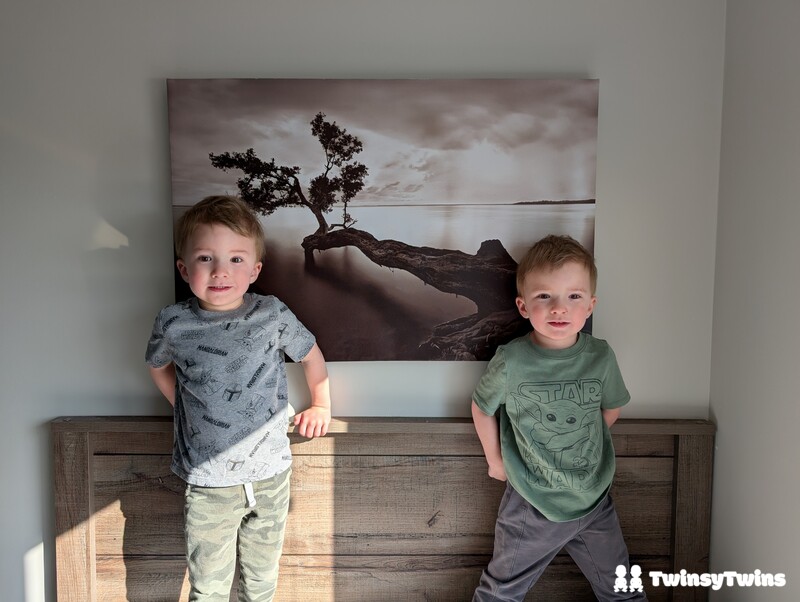
We'll get to the mirror image part in a moment, but in order to get there, we need to first talk about the different types of twins there are.
Whether you have twins or not, chances are good that you've heard of fraternal and identical twins. But did you know there are different types of identical twins, and that the type of identical twins you may carry depends on when the egg splits?
Division after one through four days results in Dichorionic Diamniotic (Di/Di) twins. Di/Di twins each have their own separate placenta and amniotic sac, and around 30 percent of same-sex sets of Di/Di twins are identical, while 70 percent are fraternal).
When the egg splits at four through eight days, it results in Monochorionic Diamniotic (Mo/Di) twins. Mo/Di twins share one placenta but each have their own individual amniotic sac. They are identical.
Division at or through two weeks results in Monochorionic Monoamniotic (Mo/Mo) twins. Mo/Mo twins share one placenta and one sac and are considered incredibly high-risk. They are also identical.
When the egg splits after two or more weeks, it results in conjoined twins.
Here's where we get to the mirror image part

Mirror image twins, while not officially medically recognized, are a subset of identical twins.
They are genetically identical, but when you look at them, they seem to have reversed or asymmetrical (mirror-image, if you will) physical characteristics that reflect each other.
They are genetically identical, but when you look at them, they seem to have reversed or asymmetrical (mirror-image, if you will) physical characteristics that reflect each other.
While there's not a standard DNA-based zygosity test to determine mirror image twins, it's estimated that roughly 25 percent of all identical twins could qualify as mirror twins. Essentially, the twins themselves, or their parents, notice enough asymmetrical features and decide they must be mirror image twins.
Their hair might naturally fall on opposite sides of their heads. Their teeth may come in in an order that is opposite from each other. They may have moles or birthmarks on opposite hands, cheeks, or legs. One twin might be left-handed, while the other is right-handed.


In some rather rare cases, one twin can even have a condition called situs inversus, which means that their major internal organs are on the opposite side (e.g., their heart is on their right side, instead of their left), while the other twin's organs are where they'd normally be.
This begs the question, "What causes some of their features to be expressed on opposite sides of their bodies?"
This happens when the fertilized egg splits longer after conception, generally between nine to 12 days afterward. For most identical twin pregnancies, the egg splits within the first week, but with mirror image twins, the split happens a few days later.
The mirroring in traits happens when the embryo has already started to develop a left and right side (this is known as the axis determination) before the later-than-usual split occurs.
When the egg divides after this point of development, one embryo takes the left side and the other takes the right side, resulting in some characteristics being asymmetrical.
"As the embryo splits, a process called lateralization occurs, where certain traits such as hand dominance, organ placement, or even dental patterns can be reversed or mirrored. This late splitting impacts the development of bilateral features, leading to fascinating asymmetries."
According to Anja Health, a women-led team focused on making cord blood banking for stem cells from your babies' placenta(s) and umbilical cords accessible to all, "the biological underpinnings of mirror image twinning are not entirely understood, but they are linked to the timing of the embryo's division. As the embryo splits, a process called lateralization occurs, where certain traits such as hand dominance, organ placement, or even dental patterns can be reversed or mirrored. This late splitting impacts the development of bilateral features, leading to fascinating asymmetries."
"Genetically," the article goes on to explain, "mirror image twins are identical, sharing the same DNA. However, the expression of that DNA can differ due to environmental factors in the womb, contributing to their mirrored traits. Research suggests that these differences are not due to genetic mutations but rather to epigenetic factors that influence how genes are turned on and off."
The mirror test you can do at home

While there's no official test a doctor can do to confirm if your twins are mirror image twins, if you think your twins might be mirror twins, there are commonly asymmetrical traits you can check for at home to confirm if your twins fall into this unique subset.
If you want to do a visual rundown of your identicals to identify opposite traits, there are some physical characteristics you can check for.
As a parent, there are minor subtleties you may notice, like hair whorls that fall in opposite directions, dimples on opposite cheeks, dental eruptions where their teeth come up on opposite sides of the mouth but in the "same-reverse" order, or that they use opposite hands to throw a ball, hold a fork, or brush their teeth.
Mirror Test Checklist
| Feature | Mirror Twin Trait | Observational Test for Parents |
|---|---|---|
| Handedness | Opposite dominant hands | Observe spoon holding or ball throwing at age two or three |
| Hair Whorls | Clockwise vs. Counter-clockwise | Check the crown of the head for the hair's spiral direction |
| Dental Eruption | Teething on opposite sides | Track the order of their first teeth appearing |
| Birthmarks | Symmetrical placement | Look for moles or spots in "reflection" locations |
| Vein Visibility | Prominent veins on opposite sides | Look for veins that stand out in "reflection" locations |
It's possible that not every single trait listed above will be asymmetrical, but mirror image twins do often have a handful of these telltale signs. The mirrored vein visibility trait is actually how we were able to tell our newborn identical twins apart in the times they looked incredibly similar to each other.


Even now, when I look back at pictures fro the newborn stage, if I'm ever unsure of who's holding who, I check for the prominent veins at the top of their noses and can instantly identify each of our babies by which side they're more obvious on.
Health implications
If you notice these differences in your twins, you might wonder if this is normal or if it's something to worry about.
Just because your twins are the same, but different, there's nothing wrong with that. Rest assured, from one twin mom who suspects her own identical twins might actually be mirror image twins, seeing these asymmetrical features in your identicals is totally normal.
Well, a variation of "normal" monozygotic twinning, thanks to the later-than-normal split.
This phenomenon makes them genetic reflections—not just genetic copies—of each other and affects about one-quarter of identical twins.
Fun facts about mirror image twins
- Mirror image twins occur when the fertilized egg splits later than usual, usually between nine and 12 days post-conception.
- Beyond asymmetrical characteristics, these twins can have mirrored habits (e.g., one twin tends to sleep on their left side, while the other sleeps on their right, or one twin leads with their right foot, while the other leads with their left.
- Very rarely, one of the twins in a set of mirror twins may have their internal organs appear on the opposite side; this is called situs inversus and means a medical scan could show their heart is on the right side or their liver is on the left side.
Reflecting on mirror image twins

Mirror image twins are a subset of identical twins. They are genetically identical to each other, but when you look at them side by side, you may notice they have reversed or mirror-image physical traits that reflect each other.
There's no standard DNA-based zygosity test to determine if you have mirror image twins, but it's estimated that about 25 percent of all identical twins couod be mirror image twins based on the asymmetrical features they share.
Are you a mirror image twin or do you think your own twins are mirror twins? What made you take a closer look? Let us know in the Comments section below or connect with us on Instagram to share your thoughts!
Read more

New Baby Health & Safety Kit Helps Parents Track Their Babies’ Health
When you have children, one of the things that's always top-of-mind for a parent is keeping their kids safe. And when you're juggling taking care of two sick babies at once, one of the things that's always top-of-mind is how you can get them feeling better as quickly as you can. One baby care company is making it easier to monitor your little ones when they're feeling under the...

Here’s Looking at You Kid: Why Vision Monitoring of Preemies is Paramount
May is Vision Health Awareness Month. It's important to keep an eye (pun very much intended) on your children's eye health all-year-round. But proactive monitoring of your twin's vision is paramount, especially if they were born premature (before 36 weeks). This is because twins are at a higher risk for vision problems. This is because twins are at a higher risk for vision...

When Stress Levels Don't Drop During the Day, it Can Impact Your Health
If you've welcomed your offspring into this world, you've likely heard of a non-stress test, which is done during the third trimester and monitors both fetal heart rates and their reaction to movement to make sure your babies are getting enough oxygen. The non-stress test is a very important, non-invasive screening done for high-risk pregnancies. After your babies are born, the other...

Scream Spiral: Mastering Twin Escalation Syndrome Without Losing Your Mind
One thing you might not anticipate when you find out you're having twins is that they feed off of each other's energy, escalating emotions and creating a cycle of chaotic behavior—sometimes, to the point of exhaustion. If one twin starts laughing, you start smiling, and before you know it, you've suddenly got two gleefully giggling babies. And that's great; it'd be no problem if the...