
We may earn a commission for purchases using our links. Learn more.
Like clockwork, flu and RSV seasons have arrived.
They'll continue to run rampant from late fall through early spring. Some respiratory viruses even continue circulating into May, but the worst of these viruses peak during the winter months.
If your babies were born prematurely...they're at a higher risk of adverse outcomes from respiratory illnesses.
If your babies were born prematurely (as tends to be the case if you have twins or higher-order multiples), they're at a higher risk of adverse outcomes from respiratory illnesses.
Beyond the early years, this increased risk of respiratory infections for your preemies actually extends into adulthood because those who are born preterm can have an overall reduced peak lung function and smaller alveoli, which increase their chances of getting more severe infections when they get sick.
According to a study on lung function of preterm infants, the differences in respiratory development between term and late-preterm infants can be seen "by the susceptibility of preterm infants to infection by such pathogens as respiratory syncytial virus (RSV), for which infection rates among preterm infants more resembled those of younger preterm infants than those of term infants."
A study by Boyce et al discovered that "infants born at 33 to 36 weeks' gestational age had similar rates of admission to the hospital for RSV infection as infants born at fewer than 33 weeks' gestational age, and there were substantially higher rates of admission in these two populations compared with those in full-term infants."
The study goes on to show that infants born at 32 to 36 weeks' gestational age who were also hospitalized for RSV had "rehospitalization rates twice as high, hospital stays three times as long, and outpatient visits twice as frequent as infants of similar gestational age who were not hospitalized for RSV."
This is why it's incredibly important for parents and caregivers to understand the difference in symptoms for different illnesses, from your run-of-the-mill cold, to flu, to RSV, so that if your little ones DO catch a nasty virus, they'll be able to recognize the signs of respiratory distress and know when it's time to take them to the hospital to be assessed by a medical professional.
What is RSV and why does it spike during colder months?
Respiratory syncytial virus (RSV) is a highly contagious respiratory virus that usually causes mild, cold-like symptoms, but it can be very serious for those who are at a higher-risk of adverse outcomes if they contract a respiratory infection—like those who are born prematurely, before their lungs are fully developed.
According to the American Lung Association, RSV is the leading cause of hospitalizations in all infants. It's spread through close contact with others who have the virus or by touching surfaces that are contaminated with the virus.
RSV is transmitted more easily in the winter months for a few reasons, including:
- People spending more time together in close contact indoors;
- Drier air helps droplets float longer in the air;
- Colder temperatures allow the virus to stay active longer on surfaces and in droplets; and
- Lower levels of sunlight and vitamin D reduce the immune response people have.
Why preemies are more vulnerable to severe RSV outcomes

The reason premature babies have a higher risk of severe outcomes from an RSV infection is because their lungs and airways haven't finished developing in utero by the time they're delivered.
There's crucial fetal lung growth that is supposed to happen during the third trimester.
There's crucial fetal lung growth that is supposed to happen during the third trimester.
When this alveolar development is interrupted by early delivery, a baby's lungs are stiffer due to a deficiency in surfactant (the substance that coats the inside of the air sacs in the lungs, making it easier for the lungs to open and close and preventing lung collapse).
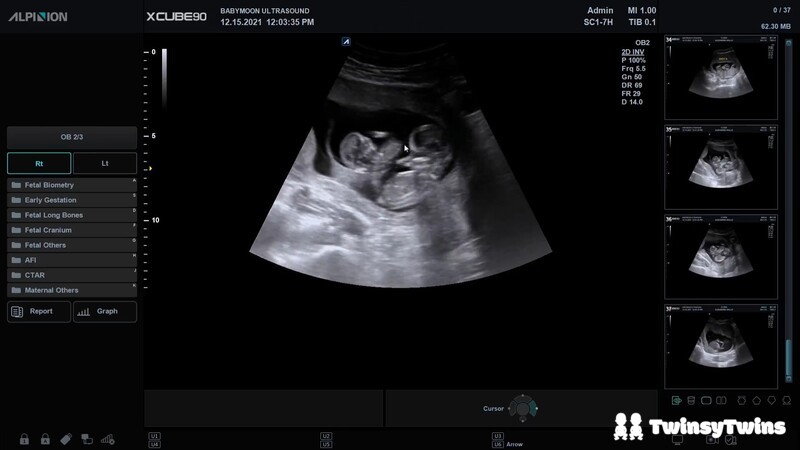
Between 28 and 36 weeks' gestation in utero, a baby's lungs undergo major structural remodeling called alveolarization in preparation for their first breath after birth.
At 26 weeks', a baby's lungs are in the saccular phase of development, a stage during which if they were born, they could potentially breathe if they had intensive medical support.
From 26 to 28 weeks', a baby shifts from forming generic air sacs to creating mature alveoli that are capable of the gas exchange needed to breathe. From 28 to 32 weeks', the internal surface area of a baby's lungs inreases exponentially as alveoli form.
From 32 to 36 weeks', the barriers between a baby's air spaces and blood vessels thin out significantly, and the lungs are considered mature after 36 weeks' along.
Fun fact: A full-term baby will be born with around 150 million alveoli; adults eventually have about double that, with their lungs continuing to create new air sacs in the first years of childhood, up until they're around eight years old.
A preemie will be born with far fewer alveoli than a full-term baby. The total amount will vary, depending on how early they're born, but for comparison's sake, it would look something like this:
- A micro-preemie born between 26 and 28 weeks will have basically no mature alveoli.
- A very preterm baby born between 28 and 32 weeks will have approximately 10 to 30 million alveoli.
- A moderate to late preterm baby born between 33 and 36 weeks will have between 30 and 70 million alveoli.
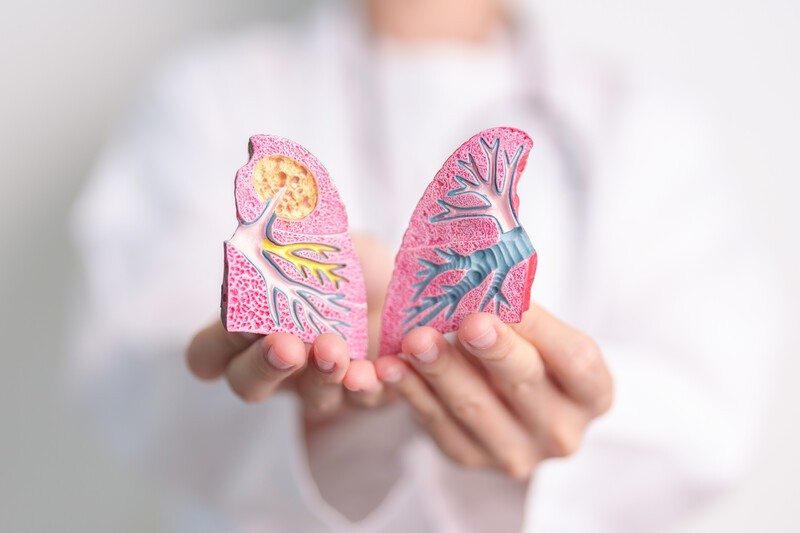
When preemies are born before their lungs finish this important stage of developing, their broncial passages are narrower than they should be and they have a lower baseline lung surface area than they're supposed to have.
They also have fewer maternal antibodies if they're born preterm.
All of these factors combined make inflammation in the airway and mucus blockages much more dangerous for premature babies than for full-term babies.
Something as simple as breathing suddenly becomes utterly exhausting for a preemie's fragile body.
Something as simple as breathing suddenly becomes utterly exhausting for a preemie's fragile body.
This is why it's so frustrating when people seem to shrug off what they think is "just a minor illness."
As a premature twin myself, who now, as an adult, has a permanent and life-threatening airway condition as a direct result of someone else thinking their illness was not that bad and then passed their respiratory infection on to me, I implore you to stay home if you're sick. You do not want to be the reason someone else has trouble breathing for the rest of their life.
Just because it's "no big deal" to you doesn't mean it's not life-changing to a preemie.
Just because it's "no big deal" to you doesn't mean it's not life-changing to a preemie.
What some healthy people consider a mild infection can quickly turn into an incredibly severe and life-threatening lower respiratory tract infection for those who are born prematurely.
Monitoring RSV symptoms

The onset of RSV symptoms typically appear between two and eight days after someone's been exposed to the virus.
The illness is generally mild for most people (adults and older healthy children), with mild symptoms akin to the common cold, including:
- Coughing;
- Sneezing;
- Runny nose;
- Wheezing;
- Fever; and
- A decrease in both appetite and energy.
Normally, these subtle symptoms will present themselves at different stages and clear up on their own after a few days.
If you suspect your babies or toddlers are feeling under the weather, it's important to monitor their symptoms to see if their condition worsens.
Write things down or keep a note on your phone, and label them separately for each twin, so you can easily track how each of them are doing.
Take their temperature as soon as you notice something might be stirring and track it throughout the day. Fevers tend to spike in the evening and can last a few days.
TwinsyTwins Shop

Medical Digital Thermometer by BIOS
Accurate Temperature Readings
This is a medical digital thermometer by BIOS. It's got memory recall, so you can easily compare a new reading against the most recent one taken (just make sure you're comparing readings from the same twin if you're taking temperatures for both of them throughout the day). It can be used to take temperatures orally, rectally, or axillary (underarm), and it can switch between Celcius and Fahrenheit. It also has an auto-off function, so you don't have to worry about shutting it off when you're focused on your little ones' well-being instead.
When taking an axillary temperature on your baby or toddler, make sure their armpit is dry and that the thermometer is touching skin only and not any part of their clothing. And remember that an axillary temperature isn't as accurate as an oral or rectal reading, so if an underarm reading tells you your child is at 99 degrees Fahrenheit, that means they're in low-grade fever territory.
A temperature that goes down by one or two degrees with medication and then rises again as the medication wears off is normal (still, take note of each temperature reading and be wary of high fevers).
But if you notice your baby's temperature doesn't go down shortly after you've administered acetaminophen or ibuprofen, it's important to seek medical care.
But if you notice your baby's temperature doesn't go down shortly after you've administered acetaminophen or ibuprofen, it's important to seek medical care.
When fevers don't go down with medication, they need urgent and immediate care, especially if they're younger than three months old, showing signs of dehydration and / or difficulty breathing, have a severe rash, or are extremely lethargic.
Spotting respiratory distress in twins

According to the American Lung Association, "a barking or wheezing cough can be one of the first signs of a more serious illness. In these instances, the virus has spread to the lower respiratory tract, causing inflammation of the small airways entering the lungs. This can lead to pneumonia or bronchiolitis."
If you notice your infant has short, shallow, and rapid breathing, this can indicate a severe RSV infection.
For those at a higher risk of adverse outcomes from respiratory infections, like older people, those who have heart and lung disease or a weakened immune system / who are immunocompromised, or babies who are 12 months or younger or who were born prematurely, RSV can cause severe symptoms, including:
- Short, shallow, and rapid breathing;
- Struggling to breathe (you can visibly see their chest muscles and skin retracting / pulling tightly inward with every breath they take);
- Apnea (pauses in breathing)
- Cough;
- Grunting
- Poor feeding;
- Unusual tiredness (lethargy); and
- Irritability.

Signs that your baby is working too hard to breathe can look like:
- A "caving-in" of the chest in between / under the ribs (these are called chest wall retractions, and you'll be able to clearly see the outline of your child's ribs as their body works hard every time they inhale);
- A "spreading-out" of their nostrils every time they breathe (like they're flaring their nostrils with every breath);
- Abnormally fast breathing (this is because they're not taking normal, full breaths; they're taking shorter, shallower breaths that don't last as long); and
- Their mouth, lips, and / or fingernails could appear to be bluish in color (this is due to lack of oxygen from taking shorter, shallower breaths).
If you notice nasal flaring, belly breathing, chest wall retractions, grunting, apnea, or extreme lethargy, these are signs of respiratory distress, and you should seek medical care immediately.
How preemie RSV affects long-term lung health
Parents of premature twins need to be aware that RSV infections can affect the long-term lung health of their babies.
While both preemie twins have a higher risk of severe outcomes, it's important to know that, statistically, the second-born twin (Baby B) has a higher risk of severe neonatal respiratory distress syndrome and consequent complications compared to the first-born twin (Baby A).
This can be caused by Baby B having a lower birth weight, the method of delivery, or perinatal stress.
Premature infants who start life with structural vulnerability in their lungs and airway and then suffer soon after from viral injury caused by severe RSV infections early in life also have a higher risk for lifelong respiratory limitations, including:
- Reduced FEV1 (Forced Expiratory Volume in 1 second) and altered lung volumes in adulthood.
- Post-viral wheezing, which can be caused by prolonged inflammation, structural airway remodeling, or altered immune responses brought on by RSV. This wheezing can become recurrent and can last for months or even years after the initial illness and can be triggered by even mild colds down the road. Most children outgrow post-RSV wheezing by the age of six, however, preemies who contract RSV early in life also have a higher risk of developing persistent asthma later in childhood.
- Bronchial hyperreactivity, a complication caused by the nerves and muscles continuing to constrict as a result of cold air, smoke, or other viruses, even long after recovery.
RSV treatment
Children are usually contagious for a day or two before symptoms start (as a parent, this is not super helpful when you're trying to prevent your other twin from getting sick), and they can continue to be contagious for anywhere from three to eight days (and infants or those with weakened immune systems can be contagious for up to four weeks, even after symptoms subside). Having said that, this virus is most infectious during your child's most symptomatic phase.
For milder cases, getting plenty of rest and hydration will usually do the trick, and your little one will be on the mend in no time. But for those who are at higher risk of infection, you'll need to monitor symptoms closely, as things can change quickly, and they may suddenly require urgent medical care.
Severe RSV cases will require hospitalization, and additional testing may be needed. This can include imaging tests, like chest x-rays or CT scans to check for lung complications, or blood and urine cultures, as RSV-related bronchiolitis can occur with an accompanying urinary tract infection in young babies.
Prevention and protection

The best way to prevent transmission of nasty viruses, like RSV, is to be hypervigilant with everyday hygiene. Teach your twins about proper hand-washing techniques and remind close family and friends about any boundaries your family has (e.g., not kissing your preemies on the face).
If your babies are born prematurely...ask their pediatrician or neonatologist about monoclonal antibody protection and see if they qualify to receive a preventative antibody immunization...
If your babies are born prematurely and have a high risk of adverse outcomes from respiratory illnesses, ask their pediatrician or neonatologist about monoclonal antibody protection and see if they qualify to receive a preventative antibody immunization, like nirsevimab, which is sold under the name Beyfortus.
Nirsevimab is different from traditional vaccines that train your immune system to make antibodies; it's a passive immunizing agent that provides ready-to-use antibodies directly to your baby. It's given as a single intramuscular injection that is engineered to last through an entire RSV season (approximately five months).
From our experience with our twins, they weren't eligible for the injection because they were born after 33 weeks' gestation, but it's worth asking their doctor if your twins meet the criteria because every pregnancy and every baby is different.
Without that additional immunization for our preemies ahead of RSV season, we were extra vigilant anytime our twins got sick, we monitored their symptoms separately and closely, and we sought medical care sooner than later when it was warranted, to ensure their bodies never had to fight harder than they needed to in order to overcome an illness.
Have either of your twins come down with RSV? How do you monitor cold or flu symptoms for your preemies? Let us know in the Comments section below or connect with us on Instagram to share your thoughts!
Read more

New Baby Health & Safety Kit Helps Parents Track Their Babies’ Health
When you have children, one of the things that's always top-of-mind for a parent is keeping their kids safe. And when you're juggling taking care of two sick babies at once, one of the things that's always top-of-mind is how you can get them feeling better as quickly as you can. One baby care company is making it easier to monitor your little ones when they're feeling under the...

Recharge & Rehydrate: 5 Great Hyaluronic Acids for Better & Brighter Skin
If you're waking up this morning, looking in the mirror and thinking to yourself that the person looking back at you looks kind of like a zombie, it's probably not a hangover. It's probably parenthood. You don't know complete and utter exhaustion until you're a parent. The first few weeks with newborn twins are tremendously tiring. The next few months are downright depleting. And the...

Corneas, Curves & Preemies: The Link Between Early Delivery & Astigmatism
Eyesight is a precious thing. So are premature babies. Did you know that prematurity can impact the long-term vision health of your babies? About 60 percent of twins—and the vast majority of higher-order multiples–are born early, before they're finished developing in the womb. If your babies need to spend time in the neonatal intensive care unit (NICU), healthcare professionals help...

Toddler First Aid Kit Essentials: What Every Twin Parent Needs On-Hand
If there's one thing parents of rambunctious toddlers know, it's that you should always expect the unexpected. That means being prepared for every scenario, even when you don't yet know what it is. In terms of toddler safety, that means having a First Aid Kit ready to go at all times. In terms of toddler safety, that means having a First Aid Kit ready to go at all times. If you...