

Eyesight is a precious thing. So are premature babies.
Did you know that prematurity can impact the long-term vision health of your babies?
About 60 percent of twins—and the vast majority of higher-order multiples–are born early, before they're finished developing in the womb.
If your babies need to spend time in the neonatal intensive care unit (NICU), healthcare professionals help your babies navigate health issues and reach developmental milestones linked to prematurity for the short-term.
But once your babies are strong enough to go home from the hospital, it's up to parents to continue to monitor their children's long-term developmental milestones.
Vision health is one of the most vital—yet most overlooked—areas of post-NICU development.
Eye development in the womb
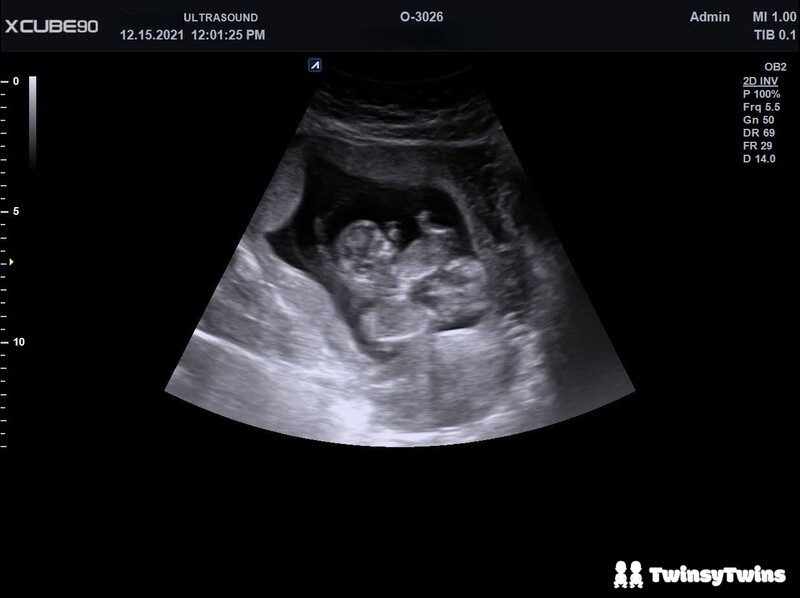
In the womb, development of your babies' eyes begins around six weeks' gestation, when they emerge as little protrusions outside of the brain.
Around 10 weeks, the eyes' basic structures, like the cornea, the iris, and the lens, are all established. At this point, the eyelids form and then they fuse shut for many months.
By 16 to 24 weeks along, the eyes are fully formed but they still stay shut at this point. Around 22 to 24 weeks, they can begin to sense bright light. At 27 or 28 weeks along, your babies can open their eyelids and blink. They can also detect light and shadows at this point.
Between 30 and 34 weeks along, your babies' pupils can contract and dilate in response to changes in light, and by 36 weeks, the eyes are considered structurally developed.
Still, they continue to grow, with finer visual structures (like the retinas and color-sensing cones) developing from this point forward, with full depth perception and color vision needing many more months beyond birth to fully develop.
How prematurity affects vision health in twins

For parents of premature twins, proactive monitoring is highly recommended because these children are at a higher risk for vision problems as they age.
Premature babies face a much higher lifelong risk for issues such as nearsightedness (myopia), crossed or misaligned eyes (strabismus), glaucoma, and / or amblyopia.
Premature birth interrupts the flattening and shaping of the cornea and crystalline lens, which happens during the third trimester. When this process is interrupted by early delivery, it significantly increases the chance of refractive errors for your babies.
These can cause vision problems, like strabismus and astigmatism.
Because preemies are prone to developing vision problems like eye misalignment or astigmatism, early pediatric eye exams are essential.
Why twins face higher astigmatism risks

Compared to full-term babies, preemies have a much higher risk of developing astigmatism and other refractive errors, thanks to the interruption of their ocular development from being born early.
According to a report published in Opthamology Times, children born before 35 weeks' gestation have a greater risk of developing refractive errors than children born at full term.
When delivery comes early and those final weeks in the womb have been removed, so has the opportunity for your babies to fully regulate their corneal curvature and spherical shape. This means their corneas can develop an irregular, oval contour, which affects how the light focuses in their eyes and can lead to astigmatism.
Studies show that between 52 and 73 percent of premature infants develop astigmatism during early infancy, and because twins are significantly more likely to be born early and with lower birth weights, they have a higher risk.
Data published in The Prevalence Rates (%) of Myopia, Hyperopia, and Astigmatism also shows that twins have a higher rate of refractive errors, including astigmatism, than singletons.
For preemies who develop severe Retinopathy of Prematurity (ROP) or require laser treatment, they face an even greater likelihood of astigmatism and nearsightedness (myopia).
What exactly is astigmatism?

There are different types of astigmatism.
Corneal astigmatism is caused by an uneven or oval-shaped cornea that resembles a football or rugby ball rather than a round baseball, whereas lenticular astigmatism happens when the lens inside the eye has an uneven or oval shape, which causes light rays to bend irregularly and focus unevenly on the retina.
Some cases of astigmatism can stabilize as a child gets closer to two-and-a-half or three years of age, but some can continue into school age or longer.
According to an analysis of long-term ocular outcomes of prematurity and associated factors, like low birthweight and ROP and its treatment, adults who were born prematurely "have a higher prevalence of refractive error, lower visual acuity, a higher prevalence of strabismus, shorter axial length, a steeper corneal radius, increased macular thickness, and a thinner peripapillary retinal nerve fiber layer thickness, as well as changes in vessel anatomy and the foveal avascular zone."
The report goes on to say that "individuals with advanced ROP requiring treatment also have higher rates of astigmatism, an increased temporal RNFL thickness, altered macular curvature, and reduced visual acuity. Prematurity leads to lifelong ocular morphological and functional changes, suggesting that fetal origins may contribute to age-related ocular diseases."
This means that ophthalmologic monitoring for preemies throughout childhood is important and could call for check-ups more often in adulthood.
Kids should go for routine eye exams at six to 12 months of age, again by age three, and again before they start Kindergarten.

Our identical twins, who were born 6.5 weeks premature, both went for a comprehensive eye exam recently. Their optometrist informed us that they both have a hint of astigmatism but that it's quite common for kids to experience at their age.
We'll continue to keep an eye on their eyes over the coming months to see if the issue persists or gets worse.
Diagnosing and monitoring vision problems

Monitoring your children's eye health during their early years is crucial.
This is because detecting issues early can help prevent more serious complications. For example, catching astigmatism early can help prevent lazy eye or crossed eyes.
Kids, especially those who were born preterm, should go for regular screenings with a pediatric opthamologist or optometrist. Doctors will perform an eye exam that's appropriate for your twins' age, and, if needed, they can use special eye drops and / or handheld instruments to measure an infant's or toddler's prescription.
In the United States, programs such as InfantSEE, a national public health program, offer free, comprehensive infant eye exams between six and 12 months of age. In Canada, eye exams with a licensed optometrist are free for children under the age of five.
Foods that are good for your eye health

While genetics seem to play quite a role in overall eye health, environmental factors can also impact your children's visual development, and there are things you can do to help support that growth.
In addition to regular eye evaluations, feeding your kids a balanced diet rich in nutrients, like zinc, lutein, omega-3 fatty acids, and vitamins A, C, and E, can be beneficial to eye health.

Carrots, sweet potatoes, spinach, and kale are top vegetables for eye health due to their high beta-carotene and lutein content. Asparagus is also good for your eye health.
For fruits, citrus options like oranges and berries provide vitamin C and antioxidants that protect against macular degeneration and cataracts.
Subtle signs of astigmatism in twin toddlers

If you have twins who were born prematurely, they have a higher risk of developing vision problems, like myopia, astigmatism, and crossed or lazy eyes.
It's imperative to keep a close eye on each of them for potential eye health problems, like sensitivity to light, poor hand-eye coordination, disinterest in objects that are far away, or colorblindness, which, according to the American Academy of Ophthalmology, is more common in boys.
Subtle signs of astigmatism is toddlers can include squinting, frequent head tilting, rubbing their eyes, and holding items such as books or screens very close to their eyes.
It's also incredibly important to schedule regular eye exams throughout your children's first five years of life to help catch any potential problems before they can cause more serious eye complications.
How do you monitor your kids' vision development and health? Do your twins have vision-related issues? How often do you take them for eye exams? Let us know in the Comments section below or connect with us on Instagram to share your thoughts!
Read more

New Baby Health & Safety Kit Helps Parents Track Their Babies’ Health
When you have children, one of the things that's always top-of-mind for a parent is keeping their kids safe. And when you're juggling taking care of two sick babies at once, one of the things that's always top-of-mind is how you can get them feeling better as quickly as you can. One baby care company is making it easier to monitor your little ones when they're feeling under the...

Here’s Looking at You Kid: Why Vision Monitoring of Preemies is Paramount
May is Vision Health Awareness Month. It's important to keep an eye (pun very much intended) on your children's eye health all-year-round. But proactive monitoring of your twin's vision is paramount, especially if they were born premature (before 36 weeks). This is because twins are at a higher risk for vision problems. This is because twins are at a higher risk for vision...

When Stress Levels Don't Drop During the Day, it Can Impact Your Health
If you've welcomed your offspring into this world, you've likely heard of a non-stress test, which is done during the third trimester and monitors both fetal heart rates and their reaction to movement to make sure your babies are getting enough oxygen. The non-stress test is a very important, non-invasive screening done for high-risk pregnancies. After your babies are born, the other...

Scream Spiral: Mastering Twin Escalation Syndrome Without Losing Your Mind
One thing you might not anticipate when you find out you're having twins is that they feed off of each other's energy, escalating emotions and creating a cycle of chaotic behavior—sometimes, to the point of exhaustion. If one twin starts laughing, you start smiling, and before you know it, you've suddenly got two gleefully giggling babies. And that's great; it'd be no problem if the...