

Surviving sickness with multiples can be challenging, to say the least, especially when you know you're likely going to be dragged down by the same stomach bug that's got everybody else down for the count.
When stomach bugs, fevers, or viral illnesses enter your household, they basically never stop at infecting just one person.
And when you have twins who come down with a contagion, you're looking at double-duty when it comes to nursing your little ones back to health.
Your twins tend to share toys, hugs, airspaces, and, well, germs.
Your twins tend to share toys, hugs, airspaces, and, well, germs. Take it from a twin mom who tried her darndest to wipe down toys before germs jumped from one twin to the next. Preventing germ cross-contamination is virtually (or, should we say, "virally?") impossible.
And because infants and toddlers have smaller fluid reserves, fluid loss from vomiting, diarrhea, or low fluid intake can spiral into dehydration quickly.
From sunken fontanelles, to abnormal lethargy, to a lack of tears when crying or dry diapers for an extended period of time, there are signs of dehydration to watch for when your young babies catch a mild illness and you're hit with the sick twin domino effect.
It's important to ensure your little ones are staying hydrated when they're sick, but it can be difficult to keep them properly hydrated when they're having trouble keeping anything down.
Before long, you could be dealing with severe dehydration—times two, which is more than doubly stressful.
This is when oral rehydration solutions can come in handy.
What is an oral rehydration solution?
An oral rehydration solution is a scientifically balanced liquid made up a mix of water, electrolytes (sodium and potassium), and carbohydrates (glucose).
When it comes to babies and toddlers, the precise ratio used in these solutions activates the sodium-glucose cotransport mechanism in the small intestine, which speeds up fluid absorption and reverses the dehydration caused by vomiting, diarrhea, or fever.
Pediatric guidance, including recommendations from the the World Health Organization and the American Academy of Pediatrics, identifies oral rehydration solutions as first‑line management for mild to moderate dehydration associated with illness, intense activity, or heat.
Gerber launches pediatric oral rehydration solution
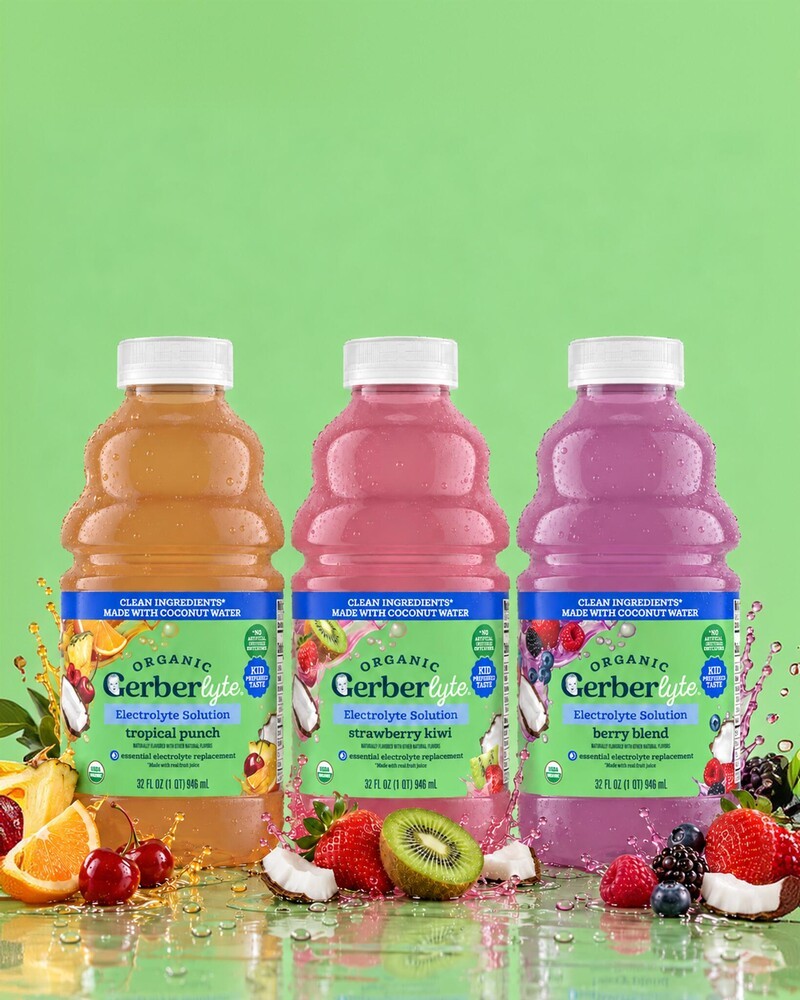
This fall, just when viruses start to run rampant for the season, Gerber launched its own oral rehydration solution, Gerberlyte, that can help babies 12 months and older with a mild illness to rehydrate and bounce back faster.
With no artificial dyes nor sweeteners, Gerberlyte offers a balanced formulation of electrolytes, water, and zinc designed to optimize fluid uptake in developing gut walls.
Gerber's oral rehydration solution is the first USDA Organic-certified pediatric oral rehydration solution made with coconut water, 25 percent DV of zinc per 12 fluid-ounce serving, and natural sweeteners, that can help children bounce back from mild-to-moderate dehydration caused by illness, intense activity, or heat.
Gerberlyte can help little ones rehydrate faster than they would from other everyday beverages, like juice or sports drinks.
Available nationwide in the United States, Gerberlyte comes in three kid-friendly flavors: Strawberry Kiwi, Berry Blend, and Tropical Punch.
A note about age and rehydration
Gerberlyte is formulated to rehydrate little ones who are at least 12 months old. If your babies are younger than one year old, check with their pediatrician before giving them an oral rehydration solution, as it can disrupt the electrolyte balance in their sensitive systems.
Infants under six-months-old should be hydrated exclusively with breast milk or formula (or a mix of both, if their feeds need to be fortified).
Introducing water or electrolyte solutions to babies who are younger than six months old can dilute their sodium levels in a dangerous way, so never administer an oral rehydration solution without first discussing it with their doctor.
Your best bet for successful rehydration
Despite your twins being, in theory, at their weakest while they're sick and feeling rotten, getting an unwell baby to take medication can feel surprisingly like wrestling two very resistant alligators.
Instead of spilling things everywhere, may we suggest offering the oral rehydration solution up through a syringe to keep the mess to a minimum or by freezing the solution into an ice pop that will also help bring down any associated increased temperatures.
How do you rehydrate quickly when illness strikes? Let us know in the Comments section below or connect with us on Instagram to share your thoughts!
Read more

Why Premature Babies Face Greater RSV Risks: What Twin Parents Need to Know
Like clockwork, flu and RSV seasons have arrived. They'll continue to run rampant from late fall through early spring. Some respiratory viruses even continue circulating into May, but the worst of these viruses peak during the winter months. If your babies were born prematurely...they're at a higher risk of adverse outcomes from respiratory illnesses. If your babies were born...

Corneas, Curves & Preemies: The Link Between Early Delivery & Astigmatism
Eyesight is a precious thing. So are premature babies. Did you know that prematurity can impact the long-term vision health of your babies? About 60 percent of twins—and the vast majority of higher-order multiples–are born early, before they're finished developing in the womb. If your babies need to spend time in the neonatal intensive care unit (NICU), healthcare professionals help...

50 Fantastic Amazon Prime Day Deals for Parents of Twins & Multiples
Prime Day deals are back, baby! You might be wondering if Prime Day deals are worth it when you have twins and have to buy multiples of a lot of things. We're here to tell you they are. Here are 50 items that actually pay off…as long as you get them before they're gone! Here are 50 items that actually pay off…as long as you get them before they're gone! First, make sure you've...

Double, Double, Toil & Trouble: Unforgettable Halloween Costumes for Twins
It may still be six weeks away, but if you love Halloween and all the fun that comes with planning creative costumes for your family, it's never too soon to get into gear. Finding all of the elements to put together the right look for whatever you're dressing up as can take a bit of time, and when you're trying to find costumes for your younger twins, it can be tricky to track down the...