

We may earn a commission for purchases using our links. Learn more.
When we think about twins, the terms "fraternal" and "identical" probably come to mind.
Most sets of twins are fraternal (or, shall we say, non-identical), with this type accounting for approximately 70 to 75 percent of all twin pregnancies.
With fraternal twins, each baby has their own placenta and amniotic sac. This makes them Dichorionic-Diamniotic, or Di-Di, twins.
But did you know that Di-Di twins aren't always fraternal and can actually be identical?
Can Di-Di twins be identical?
It might sound surprising, but the answer is affirmative. Yes, Di-Di (dichorionic-diamniotic) twins can be identical. If an egg splits within the first three to four days after fertilization, each identical twin will develop their own placenta and amniotic sac, resulting in Di-Di identical twins.
We'll dig deeper into the science behind this phenomenon momentarily.
Two eggs, or not two eggs?
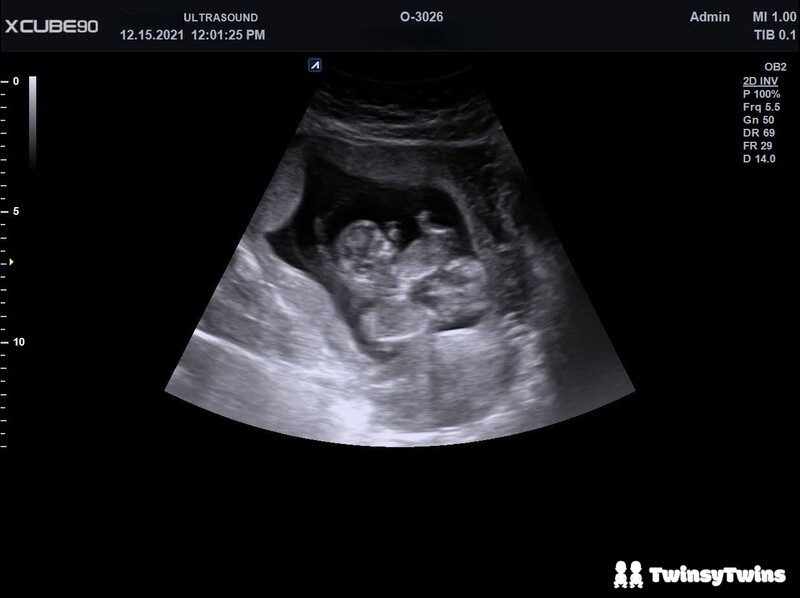
When we're talking about Di-Di twins, "Di" stands for "two." But, in this case, the "Di" doesn't stand for how many fertilized eggs there are (though, of course, there are two of those with fraternal twins, too).
The "Di" refers to the fact that there are two chorions and two amnions.
The amnion is the inner membrane, or sac, that surrounds the embryo and holds the amniotic fluid. The chorion is the outer fetal membrane that surrounds the embryo. The placenta forms from part of the chorion.
But it's very important to remember that just because you have two placentas, it does not automatically mean your twins are fraternal.
But it's very important to remember that just because you have two placentas, it does not automatically mean your twins are fraternal.
Identical twins are (often * —more on this, later) monochorionic, meaning they share one placenta.
Where they differ from Di-Di twins is that they can either share one amniotic sac or they might each have their own sac, depending on when the fertilized egg, or zygote, splits.
How can Di-Di twins be identical?
If a single zygote splits very early on (within one to four days after conception) while the cell cluster is still small, they have time to embed separately in the uterus and form their own placentas and amniotic sacs, and this is how you end up with a set of Di-Di twins who are also—surprise!—identical.
So, yes, it IS possible for a set of Di-Di twins to be identical, though it's not very common.
So, yes, it IS possible for a set of Di-Di twins to be identical, though it's not very common.
How common are Di-Di identical twins?
There are different types of identical twins, and the type of identical twins you may carry depends on when the egg splits.
Between 25 and 30 percent of all identical twins develop with separate placentas and sacs, which means that Di-Di identical twins make up approximately three or four percent of all twin births.
Di-Di identical twins are the lowest-risk when it comes to growth restriction issues compared to other identical twins because they don't share a placenta and, therefore, each have their own feeding system.
Identical twins who share a placenta are called Monochorionic. If identical twins share one amniotic sac, they're called Monochorionic-Monoamniotic, or Mo-Mo, twins. If they each have their own sac, they're called Monochorionic-Diamniotic, or Mo-Di, twins.
This is what our twins were classified as, but with our early ultrasounds, a couple of doctors thought they each had their own placenta at first and labeled them as fraternal twins—until they realized I had just one huge placenta that snaked around both sides of my womb instead of two separate placentas or two that had fused themselves together).
While I'm a mother to Mo-Di twins, I, myself, am a Di-Di twin (fraternal, not identical).
The Difference Between Identical & Fraternal Twins
| Type of Twins | Referred to as | Zygosity / Number of Fertilized Eggs | Number of Chorions | Number of Amnions | Can They be Identical? | Can They be Same-Sex? |
|---|---|---|---|---|---|---|
| Monochorionic-Monoamniotic or Mo-Mo | Identical Twins | Monozygotic; one zygote that splits between 9 and 13 days after conception | One placenta shared between both babies | One amniotic sac shared between both babies | Yes, always | Yes, always |
| Monochorionic-Diamniotic or Mo-Di | Identical Twins | Monozygotic; one zygote that splits between four and eight days after conception | One placenta shared between both babies | Two amniotic sacs; each baby has their own | Yes, always | Yes, always |
| Dichorionic-Diamniotic or Di-Di (Split) | Identical Twins | Monozygotic; one zygote that splits between one and three days after conception | Two placentas; each baby has their own | Two amniotic sacs; each baby has their own | Yes, always | Yes, always |
| Dichorionic-Diamniotic or Di-Di (Separate) | Fraternal Twins | Dizygotic; two separate zygotes that don't split | Two placentas; each baby has their own | Two amniotic sacs; each baby has their own | No, never | Yes; they can be the same sex or different sexes |
Splitting hairs over splitting zygotes

The environment in utero for a set of identical twins depends entirely on when the zygote splits.
When the zygote splits early enough, each baby can end up with their own placenta and their own sac, making them Di-Di twins who are identical.
When the zygote splits later, each baby will share a placenta and could either share an amniotic sac or each have their own sac.
Monozygotic twins form when a single egg is fertilized by a single sperm and then splits ("mono" means "one"). These twins are always identical, and, as we've learned above, can be Dichorionic-Diamniotic, if the zygote splits early enough.
Di-Di twins who form from a single zygote and split early are monozygotic twins who each end up with their own placenta and sac. They are identical and have more time to develop their own unique traits and gene expressions from one another compared to monozygotic twins who split later, after the placenta has formed. The more time that goes by before the zygote splits, the more identical twins will be.
Having said this, there are identical twins who can look quite different from each other as a result of growth restriction issues...
Having said this, there are identical twins who can look quite different from each other as a result of growth restriction issues, like Twin-to-Twin Transfusion Syndrome.
Then, there are Di-Di twins who form from two separate eggs that dropped during a single menstrual cycle and got fertilized by two separate sperm. They are dizygotic (where "di" means "two" zygotes), and they're never identical. These twins can be the same sex or they can each be a different sex.
How to know for sure: Zygosity DNA testing for twins

Now that you've read all this, if you have Di-Di twins (or are a Di-Di twin yourself), you may wonder if they're (or you're) identical or fraternal.
If you look at the set of twins and one's a boy and the other is a girl, then you know they're fraternal because twins of the opposite sex can't be identical.
But if both twins are the same sex, then the only definitive way to know for sure is with zygosity testing.
A zygosity test will analyze their DNA and compare multiple genetic markers on your multiples to tell you with certainty if they're monozygotic or dizygotic.
These popular twin zygosity DNA testing kits can confirm things once and for all.

1. Genetrace DNA Twin Test
The Genetrace DNA Twin Test can confirm whether your twins are fraternal or identical. All lab fees and shipping costs are included, and you can receive results in one to two days.

2. Genovate Twin Zygosity DNA Test
The Genovate Twin Zygosity DNA Test gives you results in one or two days and can confirm if your twins are identical or fraternal.

3. My Forever DNA
The My Forever DNA test checks 24 genetic markers and gender identification marker amelogenin; the most DNA markers industry-wide. You can expect to receive results in one to three business days.

4. Affinity DNA
The Affinity DNA Test is a 99.99 percent accurate genetic swab test that can confirm twin zygosity. All fees are included and you can expect results in four business days.

5. AlphaBioLabs Twin DNA Testing Kit
With this test, the lab fee is paid separately from the test price, and you can expect to receive accurate results to confirm twin zygosity in three business days.
If curiosity is getting the better of you (or your family and friends!), or if you have a nagging feeling your twins might actually be identical even though others are convinced they're fraternal, one of these zygosity tests can help determine for sure whether your twins are identical or non-identical.
You can't determine twin type by number of placentas
If you think Di-Di twins automatically means fraternal twins, you'll be right some of the time, but not all of the time.
About three or four percent of ALL twin births (both identical and fraternal) turn out to be Di-Di identical twins who each develop their own placenta and amniotic sac.
Of all identical twins (Mo-Mo, Mo-Di, and Di-Di), between 25 and 30 percent are Di-Di identical twins.
Above all else, remind yourself that just because there are two placentas, it doesn't automatically mean the twins are fraternal and that there's a chance they could actually be identical.
Do you know any Di-Di twins who happen to be identical? Or any twins who you could swear were identical but they're actually fraternal? Let us know in the Comments section below or connect with us on Instagram to share your thoughts!
Read more

50 Fantastic Amazon Prime Day Deals for Parents of Twins & Multiples
Prime Day deals are back, baby! You might be wondering if Prime Day deals are worth it when you have twins and have to buy multiples of a lot of things. We're here to tell you they are. Here are 50 items that actually pay off…as long as you get them before they're gone! Here are 50 items that actually pay off…as long as you get them before they're gone! First, make sure you've...

Double, Double, Toil & Trouble: Unforgettable Halloween Costumes for Twins
It may still be six weeks away, but if you love Halloween and all the fun that comes with planning creative costumes for your family, it's never too soon to get into gear. Finding all of the elements to put together the right look for whatever you're dressing up as can take a bit of time, and when you're trying to find costumes for your younger twins, it can be tricky to track down the...

Get Primed for Savings: 10 Great Prime Day Deals for Parents of Multiples
If you have twins (or are expecting some and preparing for their imminent arrival), you know how expensive they can be, especially when you have to double-down on most costs. Why not save some money if you can? Prime Day deals run from today, June 23, through June 26. We've rounded up some major savings on essential gear for parents of multiples. Check 'em out before they're gone....

Like Saving? Shop 99 Early Black Friday Deals on Baby Must-Haves in Canada
Kids are cute. They're also expensive. And when you've got two who are growing up side-by-side and hand-in-hand, it's incredibly cute...and exponentially more expensive. Making double-puchases again and again can make you feel like you're breaking the bank, so if you can find a deal on something you need, it can make you feel like the lottery. As we get closer to the holidays and the...