
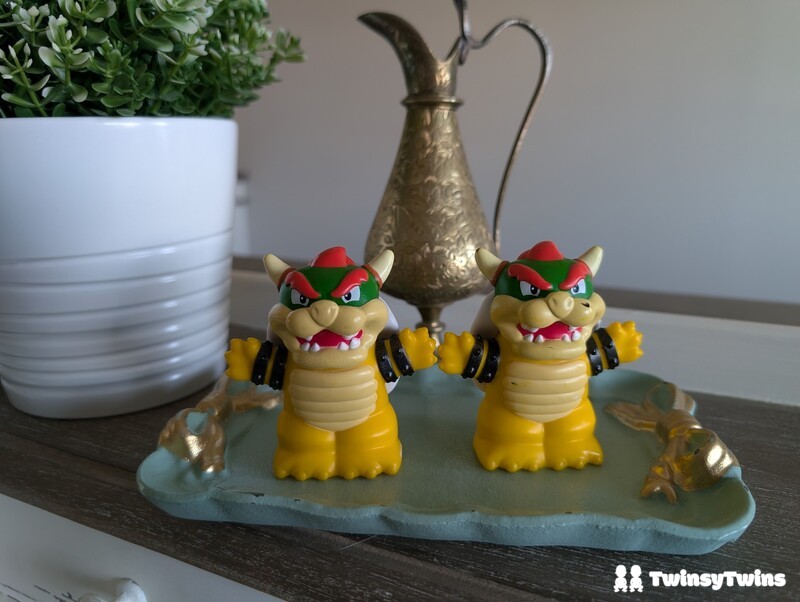
When you have twins, you already have to do everything twice.
And when you ask your very independent toddlers to do something and they tell you, "No!," it takes four times as long…or six, or eight, depending on how many times they tell you no before you can get them to complete the task.
When you have twin toddlers who fight you on every single thing you try to get them to do, every hour of every day is utterly exhausting.
Double the defiance
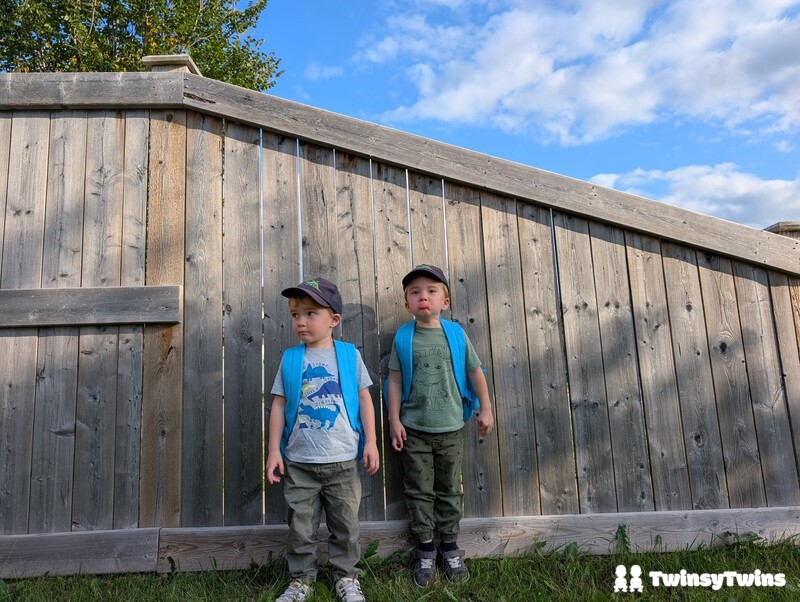
When your once-compliant toddlers start pushing every boundary, it can become quite tedious.
Most things are decided for them without them getting any say: What they're wearing, what they're having for breakfast, when they're leaving the house for the day and coming back home, and when they're going to bed.
One day, they realize that their wants conflict with yours.
One day, they realize that their wants conflict with yours.
You ask them to stay where they are, and they give you "the look" and make a break for it.
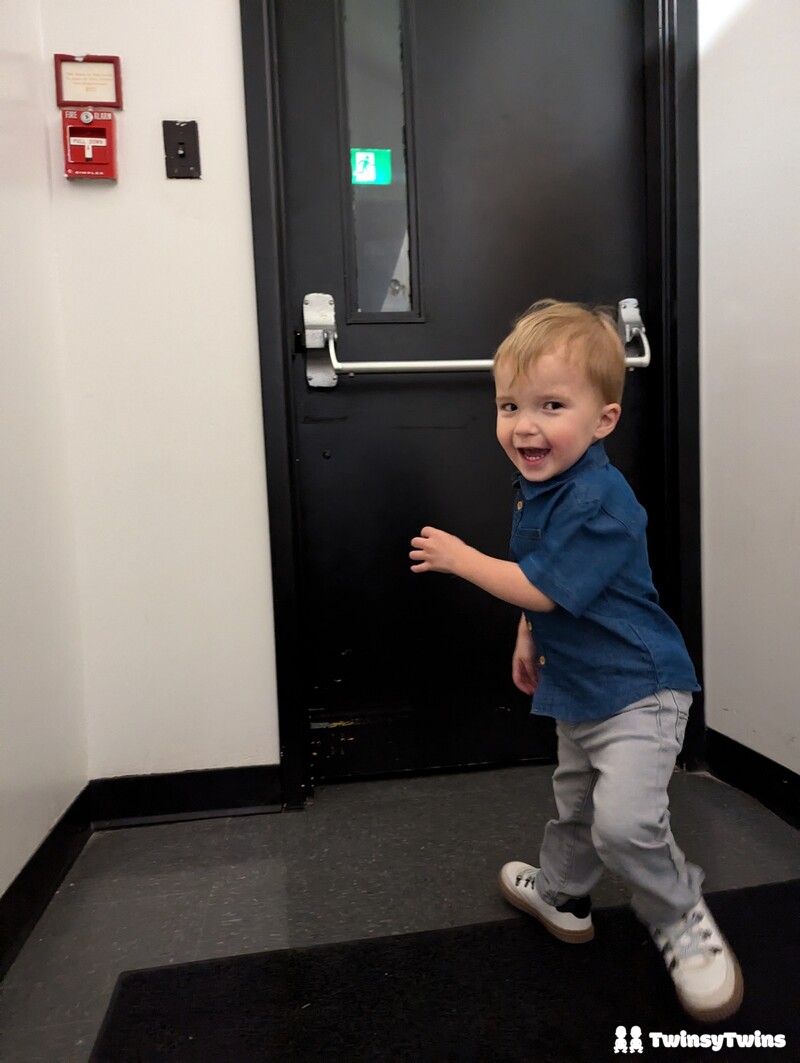
You ask them to go to the potty, and they exclaim that they don't have to go and then race to the bathroom a few moments later.
You tell them breakfast is ready, and they tell you they aren't hungry.
You ask them to get dressed, and they run away, screaming that they want to wear their pajamas all day.
It's hard enough trying to go through the motions of the regular routine with one very independent toddler. As you might guess, it's harder with two very independent toddlers.
Because they can work together. Against you.
Because they can work together. Against you.
Twins feed off each other's energy, so once one of them says no, their sibling realizes they also have the power to say no—and the fun begins.
Trying to get one tiny human to do what you're asking can be hard enough.
When you finally get one twin on board (or at least headed in the right direction), only to have them run away from you the second you turn your back to try to convince their counterpart to comply with your request, the game gets old quickly.
Pretty soon, you debate just staying at home instead or giving up on whatever you were trying to get done, like both of them looking at the camera at the same time and smiling...or, at least not making a silly face for just one picture.
What drives defiant toddler behavior?

It's important to remember the non-compliance from your twins isn't manipulation, nor is it disrespect.
This boundary-pushing is an immature brain developing right before your very eyes, which is pretty amazing when you think about it, even if it can feel frustrating at times.
It's them recognizing their own autonomy; that they can be in charge of themselves and make decisions to act independently in a way that is out of your control.
It's them each exploring the options, exercising control over their environment, and choosing to do something other than what you're asking.
And that's why instead of doing what you ask, like they've done hundreds of times before, they suddenly look you directly in the eyeballs and test the boundaries by telling you, very pointedly, "No."
Or, sometimes, if you've repeated yourself two or three times, they assert themselves with a doubly loud, "NOOOOO!"
Enter, the daily power struggle...times two.
Enter, the daily power struggle...times two.

The reason everything becomes a power struggle is because, at this developmental juncture, toddlers become very focused on embracing their independence.
Having choices.
Being in control.
Analyzing what's fair and what's not, especially when they can compare against their twin.
Defiance is a developmental norm

If you're worried about your toddlers' recent realization that they can resist your parental orders, rest assured, this is a normal and healthy part of growing up.
They're just trying to exercise a little control over their world because they realized they CAN.
But be prepared that when your twins hit this milestone at the same time, it can make getting ready and out the door much more difficult and it can take much longer than it used to, so you'll have to allot extra time for that (as if doing essentially everything twice wasn't already enough).
When does defiance start?

This stage of toddlerhood tends to begin when they're around 18 months to two years old, just as they realize they have their own wants and can make their own decisions.
So, what do they decide?
To test the boundaries of the authority figures in their life (and also their own developmental limitations) several times a day to see what happens and what they actually have control over.
This magnificent milestone can hang around for quite a while, lasting through the Terrible Twos and the Threenager zone, with ages two and three often being the peak for defiant behavior.
This special time is filled with perpetual power struggles as they test what they can truly get away with...
This special time is filled with perpetual power struggles as they test what they can truly get away with, like not cleaning up toys, resisting brushing their teeth, or refusing to get dressed.
Having said that, toddler defiance can even extend to the time they're four and five years old, with things generally calming down between the time they're four and five, when they develop better communication skills, learn more acceptable ways to express the frustrations they're feeling, and are better able to regulate their emotions and follow rules.
This is right around the time when toddlers learn how to negotiate to try to get what they want, shifting out of the tantrum mode you've become accustomed to and into a little person who is capable of sharing why they're upset and trying to convince you why they should get what they want.
When to seek help for defiance
If you notice their defiance continues beyond five years of age and doesn't seem to be getting any better, talk to their pediatrician about any concerns you have or ask to be referred to an early childhood development professional to see if there could be something more going on.
If the defiance lasts for more than six months and doesn't show any signs of improving, or if your toddlers' aggressive behavior has become a continual daily struggle to the point that it's impacting your family life, how they function at daycare or preschool, or is resulting in other kids getting hurt, you might want to ask their doctor about Oppositional Defiant Disorder or Sensory Overload.
Getting your twins to comply

While you can't completely avoid the moments that bring on the power struggles, it is possible to bring back the calm without having to deal with major blow-ups.
When they shout, "NO," instead of telling them, "YES," or "Too bad," give them limited choices that ultimately lead to what you need to get done.
Instead of asking them if they have to go to the potty (which they can just say "no" to) or telling them they have to go to the potty right now, tell them it's time to go to the potty and then offer up the choice of having you help them or going all by themself on their own.
Instead of doling out demands that they'll fight you on, offer your toddlers options. It gives them the perception they're in control, and being able to do decide how they do something can actually reduce their defiance overall.
When they do push back, it's helpful to acknowledge their pushback without escalating the matter. Tell them you understand how they're feeling, while still keeping your boundary in place (e.g.: I know you don't want to go to preschool right now and you're feeling frustrated, but we have to get ready to go, our friends are waiting for us.).
For the strong-willed ones

Strong-willed kids can be more difficult to deal with in these tricky moments. Because for them, maintaining control can feel more important than avoiding consequences.
For example, they don't care (in this exact second) that all of their toys will be taken away if they don't start cleaning them up right now; they're deciding they absolutely willl not clean up because they weren't done playing, and they're standing firm on that decision because they're allowed to make it.
When toddlers feel forced, their brains move into resistance mode, and the more forced they feel, the firmer they'll stand, even if it means they're not going to see their toys for an extended period of time.
Then, when you hold up your end of the bargain and start removing the toys, they realize the decisions they make can lead to consequences they may not like very much.
Strong-willed children don't necessarily respond to demands without explanation. They need to hear the reason behind a request before they get on board to do what you ask.
Will this lead to a series of 20 questions? Maybe.
Will this lead to a series of 20 questions? Maybe.
But, sometimes, just offering up a reason is reason enough to get them to do what you ask.
For example, explaining that they need to clean up their toys because someone tripped on a toy that was left on the floor and got hurt, and that if we can't clean up our toys off the floor, we'll need to move them out of the house where people can't trip on them holds more weight for them than simply ordering them to clean up their toys right now or they'll never see them again.
If you find yourself feeling frustrated with THEIR frustration and having to explain yourself, keep in mind that the strong-willed toddler who is questioning you is exercising critical thinking.
Separation during standoffs
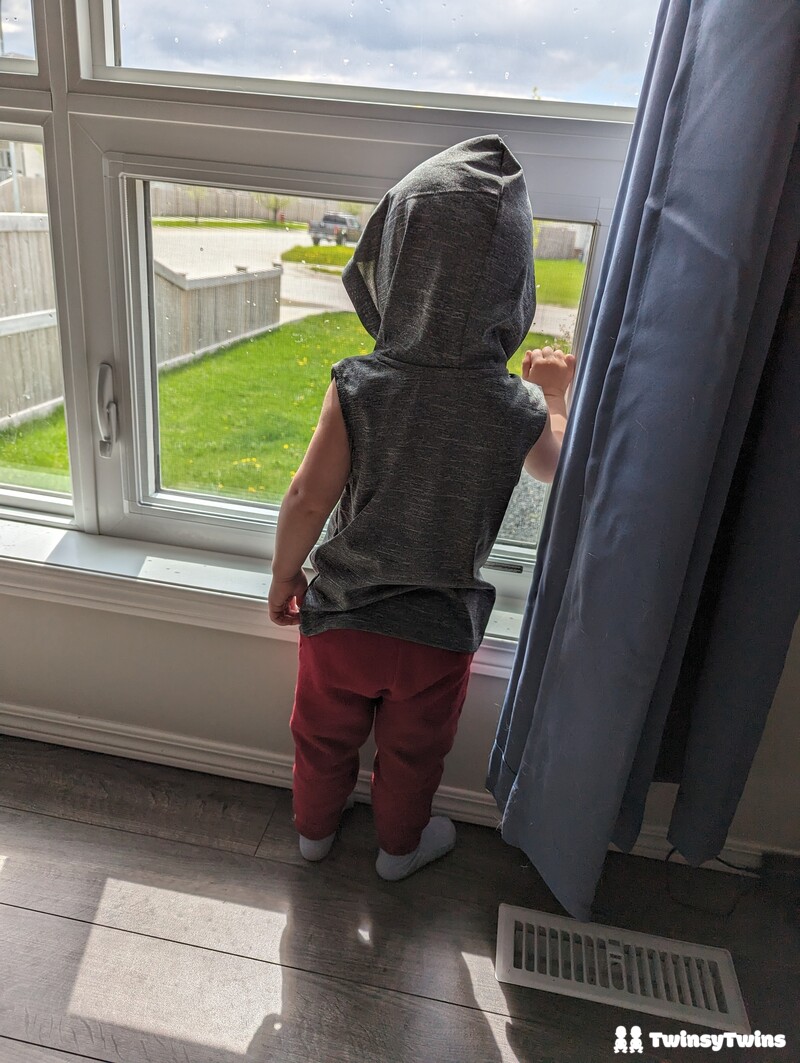
When you've got two toddlers who are testing the boundaries simultaneously, things can get tricky.
And loud.
In fact, the more they don't want to do something and the bigger the feelings are, the LOUDER it's going to get—especially when they feed off of each other.
Before you can figure out where their frustrations are even coming from, it becomes a cacophony of chaos, so it's best to separate your twins, even for a few seconds, to reset everyone's emotions.
Take them to different rooms if you can, but try not to leave them alone. You don't want them to feel like they're in trouble for having feelings. Have a parent with each toddler to help them co-regulate and talk about things.
Take them to different rooms if you can, but try not to leave them alone. You don't want them to feel like they're in trouble for having feelings.
If you're flying solo with your twins and one of these moments pops up, it can be helpful to move them to a neutral zone. The first step of our staircase has become our go-to spot when we need to catch our breath and do a quick reset.
The change of scenery from where the feelings fell on top of us allows everybody to calm down and talk about what they're feeling and why, so you can get everybody back on track for the task at hand and the rest of the day.
Assess the assertiveness
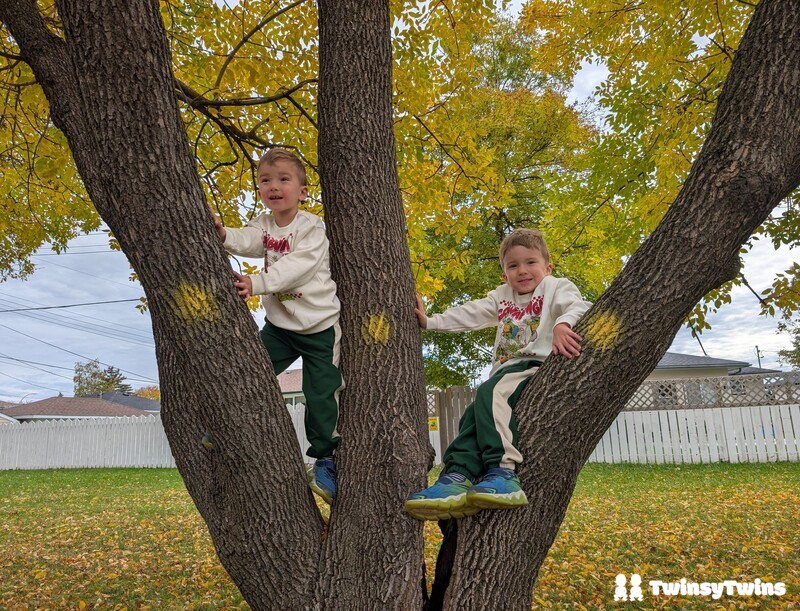
The safest place to test the boundaries and experiment with the rules and outcomes is at home with mom or dad, and that's why they continue to act like angels at daycare or preschool but start to push back when they're in the comfort of their safe place at home.
What we, as parents, can't physically see is that while they're giving us a run for money (and sanity), they're undergoing crucial healthy development as they work on building up their self-control, respect for limits, emotional safety, and independence.
Look at what they're fighting you on in the moment and, if it's not a major deal in the grand scheme of things, let them be in control. They'll learn that it's important to speak up and that their voice matters and can make a difference.
In the heat of the moment, it can be hard to remember that when they're all grown up, the voice they're using to fight you with will be the same voice they use to stand up for themselves.
And, yes, sometimes, they're fighting you on something you can't bend on, so you have to be firm on the boundary and explain why after the Meltdown Moment has passed (don't try to explain if they're in tantrum mode, or the reasoning will fall on deaf ears because in that moment, all they can focus on is what they want, not why they can't).
When you're able to talk calmly about why they can't always get their way, even if it doesn't seem fair and even if they feel mad about it (remind them it's okay to feel that way), they'll eventually learn how to respect boundaries and deal with disappointment without feeling like they're falling apart.
Were your twins equally defiant when they were toddlers? How do you deal with it day after day? Let us know in the Comments section below or connect with us on Instagram to share your thoughts!
Read more

Toddler First Aid Kit Essentials: What Every Twin Parent Needs On-Hand
If there's one thing parents of rambunctious toddlers know, it's that you should always expect the unexpected. That means being prepared for every scenario, even when you don't yet know what it is. In terms of toddler safety, that means having a First Aid Kit ready to go at all times. In terms of toddler safety, that means having a First Aid Kit ready to go at all times. If you...

Water Safety: Everything You Need When Your Twins Start Swimming Lessons
When it comes to having twins, there's mention of twice the diapers, twice the work, double the giggles, and double the love, but one thing that doesn't really come up are the challenges that come when you have to sign up multiple children for the same activity at the same time. Sometimes, it's not an issue. But when there are limited spaces available, and you have twins, you suddenly...

How to Dye Easter Eggs Like a Pro—with Stuff You Already Have at Home
Easter. A time when we see perfect pastels and delightful designs displayed on exquisite eggs. While there are, without a doubt, some incredibly intricate eggs (Pysanky) that we could never attempt to do at home (at least, not with twin toddlers), there's a super easy way to dye Easter eggs at home with your kids that hardly makes any mess at all. It's so easy, in fact, that I...

Spring Cleaning: 6 Ways to Tackle the Messes that Come with Twin Toddlers
With the unending and oh-so-creative messes that come with having twin toddlers, you need to have a solid game plan for tackling everyday messes. The regular ones, like random cereal bits that accidentally fell to the floor during breakfast...and the unexpected ones, like the juicebox that got squeezed too tightly while someone was sitting on the couch or the container of baby lotion...