

Hydration is crucial to keeping your kids healthy. In the summer months, when it's hot out, it's easy to remember to keep everybody hydrated. But drinking water should be on a parent's mind every day, no matter what season it is or what the weather's like.
Breastmilk and / or baby formula should be your babies' only source of hydration until they're six months old, but once they're six months old and you have the all-clear from their pediatrician, you can start introducing water (in small amounts) to their daily diet to help them learn what it's all about and so they can start practicing the skills that come with drinking water.
When the time comes, you may wonder how much water your kids should be drinking on the daily? The answer depends on how old they are.
How much water should my kids be drinking in a day?
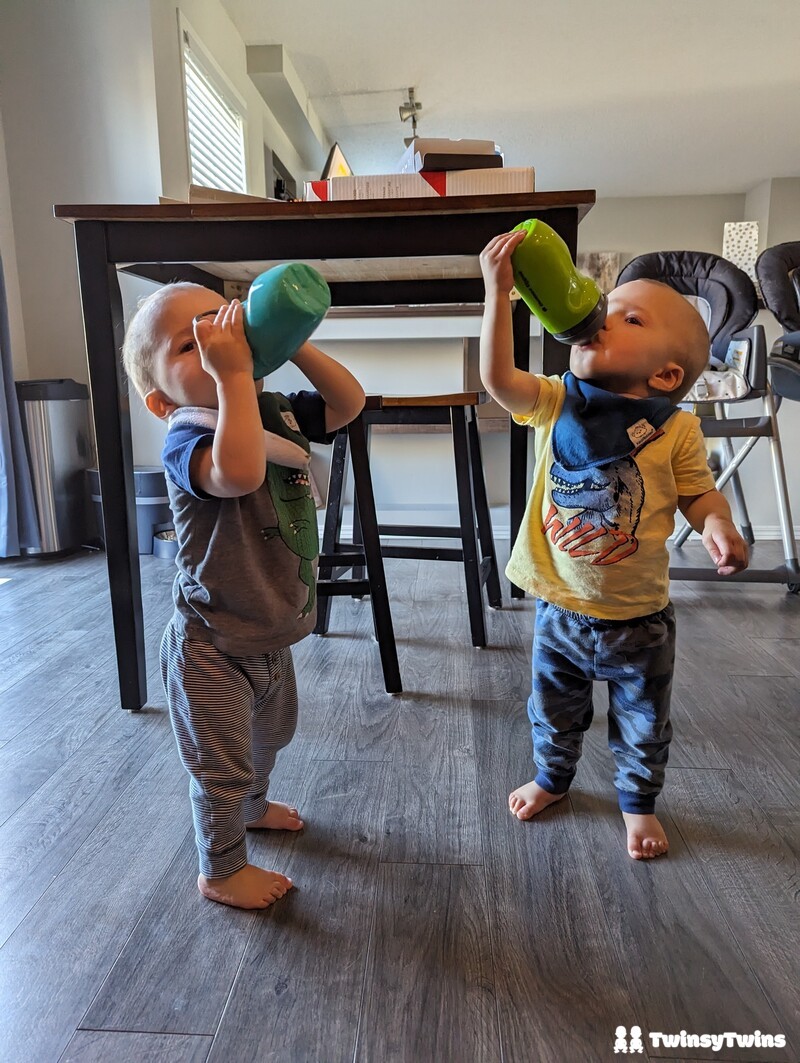
The recommended daily water intake for children depends on their age. Infants under six months of age should only drink breastmilk or baby formula. They shouldn't drink plain water at that age because their bodies are still developing and can't handle it.
While it might seem like giving them water or adding extra water to their formula is a harmless idea, it can actually lead to serious health issues, including water intoxication (also called hyponatremia), malnutrition, and electrolyte imbalances, so it's best to wait until they're six months old or until your twins' pediatrician gives the go-ahead to introduce water to their diet.
For kids who are over the age of six months old, see the below daily water intake breakdown and always check with their doctor if you have any questions or concerns about their diet or water intake.
Recommended daily water intake amounts for children:
- Six months to eight months old: Between two ounces (¼ cup) and four ounces (½ cup) maximum. The idea is to introduce water to meals and snack time but to keep the amounts low (just an ounce or so at a time), so your babies don't fill up on water because they still need to ensure they're getting the hydration and calories they need from breastmilk / baby formula and food.
- Nine months to 12 months old: Between two ounces (¼ cup) and eight ounces (1 cup) maximum. Once your babies are one year old, their water intake amount will naturally increase as it becomes their primary hydration source (their breastmilk / baby formula amounts will decrease as their water amounts increase—and don't be surprised if your twins drink different amounts of water as this transition occurs; they are different people, after all and could drop their milk ounces at different rates).
- One year old to two years old: Between eight ounces (1 cup) and 32 ounces (4 cups) maximum.
- Two years old to five years old: Between eight ounces (1 cup) and 40 ounces (5 cups) maximum.
- Five years old to eight years old: Between 16 ounces (2 cups) and 40 ounces (5 cups) maximum.
- Nine years old to 13 years old: Between 22 ounces (2 ¾ cups) and 61 ounces (7 ⅝ cups) maximum.
- Fourteen to 18 years old: Between 29 ounces (3 ⅝ cups) and 88 ounces (11 cups) maximum.
Tips to increase water intake

If your children are on board with drinking water as is, give yourself a pat on the back and cheers the moment with a nice, cool drink of high-quality H2O. But if your kids aren't so keen, there are a few things you can try to make drinking water more fun for them, like:
- Get them each a fun water bottle (an insulated one will keep their water cooler all day long), or if they want to steal mom's or dad's water bottle, let them use it—assuming it's kid-friendly.
- Take a bottle of water wherever you go, so they've always got access to it.
- If your kids aren't reaching for the water on their own, set a time every 30 minutes or hour and get them to take a few sips.
- If your little ones say they don't like the taste of water, you can always try infusing water with fruit and keeping a jug with infused water in the fridge. If you get them to help make it, they might be more eager to drink the fruits (pun intended) of their labor.
- Keep their water ice cold. Get them to add the ice cubes to their bottle; it'll get them excited and they might be more likely to grab it to cool down after they've been running around.
- If all else fails, you can try giving them a fun straw, whether it's brightly colored or super twisty.
Another way to help keep your kids hydrated, aside from drinking water, is to make sure they have high-water-volume snacks (think melons or even smoothies, bell peppers, broccoli, cucumbers, or tomatoes).
Keep 'em quenched

While you're probably already focused on how many ounces of breastmilk or baby formula your little ones are getting, once they're old enough (over six months old), it's equally as important to make sure your kids are getting enough water in their diet as well.
You want to make sure they don't get TOO much water when you first introduce it, and the amounts they'll drink each day will increase with their age.
If your kids don't love water on its own, there are ways you can make it more fun for them (hello, fun new water bottle!), but if they still don't totally go for it, know that you can keep them fairly well-hydrated by ensuring they still drink milk and that they also have access to high-water-volume snacks throughout the day.
How old were your babies when you introduced water to their diet? Let us know in the Comments section below or connect with us on Instagram to share your thoughts!
Read more

How to Successfully Wean Your Twins Off of Overnight Feeds
Making the decision on when to wean your twins off of overnight feeds is a big one that will differ for each parent. You'll want to make sure your babies are getting enough calories during the day to make up for not getting any overnight once you wean them off of their overnight feeds. The timing Appropriate timing and daily caloric intake are both things you'll want to discuss with...

When Cinco De Mayo Falls on Taco Tuesday: The Best Recipe for Chicken Tacos
When Cinco de Mayo falls on Taco Tuesday, you KNOW what's on the menu. You should probably have tacos because the next time May 5 lands on a Tuesday won't be until 2037. For real. Instead of being just six years away, the Leap Year pushes this phenomenon 11 years into the future. To celebrate the momentous timing of Cinco de Mayo falling on Taco Tuesday, here's one of our favorite...

Stop Hanger (Times Two) in its Tracks with These Perfect Snack Packs
The only thing that can derail a day faster than a suddenly-hungry toddler is two suddenly-hungry toddlers. When those moments strike without warning, you have very limited time to defuse the situation. This usually requires some serious snack-slingin' skills. Your best bet is to have mini morsels at the-ready at all times. Your best bet is to have mini morsels at the-ready at...

Double the Bottles, Half the Wait: These 3 Dual Bottle Warmers are Great
If you've ever suddenly been hit by a pang of hunger and then realized you need food NOW, you're familiar with how your newborn twins are feeling when they're trying to communicate to you that they're ready for their next feeding. Except that they can't talk yet, so they communicate in the only way they know how—by screaming at their caregivers at the top of their lungs until they get...