

We may earn a commission for purchases using our links. Learn more.
It's the last day of Child Passenger Safety Week…also known as Seat Check Saturday!
This is your sign to review the car seat set-up in your vehicle to make sure everything is fitting—and sitting!—properly every time you transport your kids from Point A to Point B.
This year's theme is Safe from the Start, which highlights the importance of preparing for your babies' first ride home—and for every ride after that.
Car seat safety is crucial
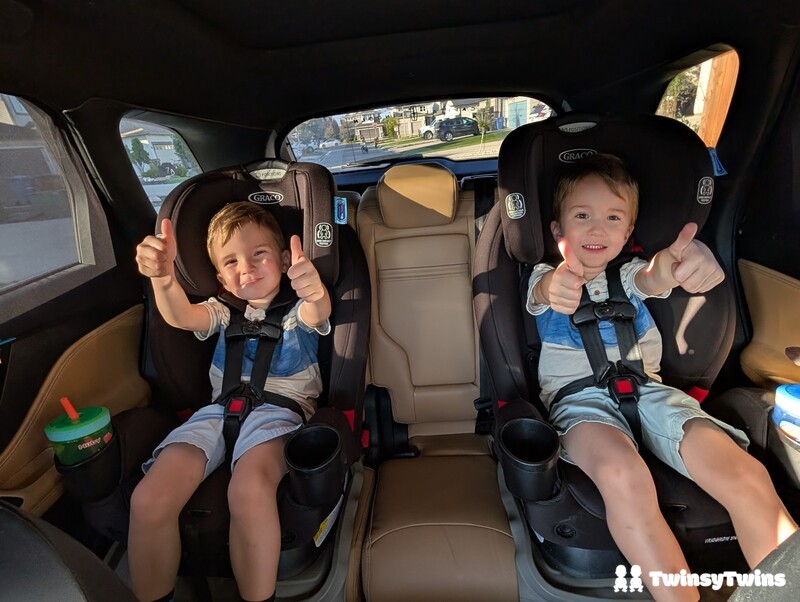
Car seat safety is crucial for every family.
When you've got multiples and you're installing two or three car seats at the same time, the challenge doubles and can leave you sweating more than the moment you found out your "one baby" was, in fact, actually two.
When...you're installing two or three car seats at the same time, the challenge...can leave you sweating more than the moment you found out your "one baby" was, in fact, actually two.
National Seat Check Saturday gives all parents and caregivers an opportunity to ensure their multi-seat set-up is properly installed.
While almost every single kid on the road is buckled up (99 percent), nearly three-quarters of car seats are being used or installed incorrectly, 30 percent of kids in booster seats don't meet the 40-pound weight minimum, and more than half of the kids using seat belts only don't fit safely without a booster seat.
This is according to the Child Passenger Safety Association of Canada, an organization that promotes child passenger safety through public education, advocacy, and training and a recent roadside study.
The same study also found that a properly used seat can reduce the risk of fatal injury by 71 percent.

To help ensure the safety of your child passengers, make sure your twins are safely buckled into their seats every single time they ride in a vehicle and double-check that their car seats meet your country's safety standards.
Knowing when it's safe to move your kids from rear-facing seats to forward-facing seats, from forward-facing seats to booster seats, and from booster seats to, eventually, just seat belts is another way you can help keep your kids safe when they're on the road.
For those who aren't sure, a properly-fitting seat belt has a lap belt that lays across the upper thighs (not the stomach) and a shoulder belt that lays across the chest (not the neck).
There's tons of other helpful information on car seat safety and restraints, here.
Seven safety tips to keep in mind this Seat Check Saturday

While you wait for your little ones to reach the height and weight limits needed for the next seat upgrade, make the effort to conduct safety seat checks to ensure everything is set up as it should be.
Here are some of the top safety points to check with your car seat set-up in your vehicle:
- Make sure the seat is sitting level, that the headrest and shoulder straps are at the correct height for each individual twin (even though our twins are identical, they have diffeent heights and weights, and that means their car seats are set up slightly differently to ensure everybody's safe), and that the five-point harness is connecting, fitting properly, and sitting securely along the shoulders, hips, and crotch.
- Make sure each car seat does not move more than one inch front to back or side to side when pulled. This means it's properly installed. The one-inch guideline holds true whether the seat is rear-facing or forward-facing and whether it's installed using the LATCH and top tether or seat belt and top tether method.
- Make sure it passes the pinch test. Once the harness is buckled and tightened, pinch the harness at the shoulder. If it's snug, your fingers will slide off of the material. If it's too loose, you will be able to pinch the harness webbing between your index finger and thumb. Keep tightening the harness until you pass the pinch test.
- Make sure you're using the correct harness slots for the shoulder straps based on your twins' respective heights, and be aware if the straps should be sitting at or just below (or at or just above) the shoulder (this depends on whether your car seat is rear-facing or forward-facing.
- Make sure everything looks good with the placement and fit of the seat belt's shoulder strap with your booster seat. Follow the guidelines on your booster seat; the seat belt's shoulder strap should fit across your little one's chest and on the shoulder, not across the face nor the neck. The lap belt should sit atop the legs or low on the hips, not across your child's stomach.
- Make sure the set-up passes the seat belt fit test if you think they're ready to ditch their booster seats. Complete this test in every car your child will travel in. Place the seat belt over their shoulder and low on the hips; if your twins cannot fit properly or securely with only a seat belt, revert to the booster seat.
- Make sure the child safety locks are activated. Whether you've got rear-facing or forward-facing car seats, don't forget to activate your vehicle's child safety locks on the passenger doors. You don't want to be driving down the highway when your twins suddenly realize they can reach the door handle and decide to take that moment to figure out how to pull it open. Your vehicle's owner manual will direct you how to activate the locks quickly.
Beyond these tips noted above, parents should also avoid unauthorized car seat accessories to ensure safety while on the road.
Stalled up on the installation?

If you run into any insurmountable issues while installing your children's car seats, don't fret.
There are certified child passenger safety technicians across the country who are trained to show parents and caregivers how to safely install and properly use car seats and booster seats in their vehicles.
Click here to find a car seat check station or technician near you in Canada.
Click here to find a car seat check station or technician near you in the United States.
Beyond Seat Check Saturday, Safe Kids coalitions hold car seat check-up events and inspections around the United States throughout the year.
Find an event near you or look for a certified child passenger safety technician who can help you.
Do you conduct car seat safety checks regularly throughout the year? Do you have a checklist you follow? Let us know in the Comments section below or connect with us on Instagram to share your thoughts!
Read more

Evenflo Recalls Select Models of Infant Car Seats Over Calibration Issue
Evenflo is voluntarily recalling select models of its Revolve180 LiteMax NXT infant car seat after additional safety testing found that some seats did not meet certain federal performance requirements due to a calibration issue with the level indicator. The recalled car seats were sold in the United States and manufactured before April 1, 2025. The recalled car seats were sold in...

Evenflo Recalls Certain REO Car Seat Models Due to Safety Concerns
As a parent, the most important thing is keeping your children safe, whether you're at home or on the road and getting your family from Point A to Point B. We research and purchase items that we feel are safe, and for the most part, they are. But, sometimes, products are recalled after additional safety testing is conducted. This is why it's important to pay attention to product...

The 3-Across Car Seat Solution: Fitting Three Car Seats in One Row Safely
Parents of multiples, rejoice! If you already had a singleton and found out your familiy is growing and you're now welcoming twins, or if you went from zero to two babies first and are now adding another sibling into the mix, you can rest assured you don't have to get a brand new vehicle (anyone trying to avoid a minivan??) to accommodate all of these car seats. While it might seem...

Seat Check Saturday 2025: How to Keep Your Twins Safe in Their Car Seats
You can't count on other drivers on the road to be doing what they're supposed to be doing. You hope they are (and most of the time, they are), but if you're like me, you assume they're going to do something that doesn't follow the rules of the road, so you always drive with extra caution. What you CAN count on is yourself—how you drive and what you do to keep passengers in your car...