

Breastfeeding one baby can feel intimidating.
But when you find out you're carrying more than one baby, the pressure of feeding two newborns simultaneously might make you doubt your milk supply and whether you'll be able to produce enough for two tiny, little humans.
You may also wonder whether you'll have the energy to handle breastfeeding twins physically (we're talking double the feeds AND also double the unexpected cluster feeds that come with growth spurts, too).
And, then, there's the logistics of getting two small babies (possibly premature) positioned and latched properly at the same time for a dual feed.
Despite these potential mindblocks, we have to remember that our bodies are amazing.
They can grow and nourish a baby, and they can adapt on the fly when you find out you're having two babies instead of just one.
So, if you just found out you're expecting twins (or if you just welcomed your precious babies), and you're worried about being able to produce enough breastmilk for your multiples, rest assured, it is possible.
To celebrate National Breastfeeding Week, we're looking at some of the incredible ways a mother's body naturally adjusts to meet the changing needs of her twins.
Facts you might not know about breastfeeding twins
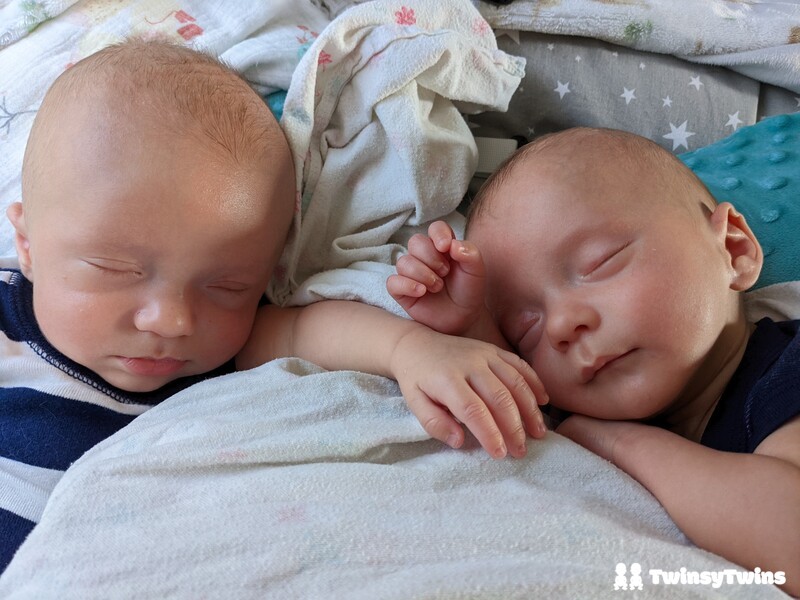
- If babies are born prematurely, a mother's body will adjust to make different milk for their preemies, with more protein, more fat, and more immune factors. The breastmilk also increases its white blood cell count, as needed, if the mother or babies get sick.
- During skin-to-skin contact (also called Kangaroo Care), a mother's chest will adjust its temperature automatically to help regulate her babies' temperatures, warming up when their babies are cold or cooling down when they're too hot. This is the case, even with twins; if they're holding both babies simultaneously, each side of a mother's chest will change, as needed, independently, to keep them warm or cool, whatever they each need. This fascinating phenomenon is called thermal synchrony.
- Nursing a single baby burns approximately 500 calories every day, and nursing twins requires about 1,000 calories per day, so a mother's daily intake needs increase by 450 to 500 calories per baby from their pre-pregnancy baseline. This amount can be impacted by their babies' growth spurts, a mother's activity levels, and whether or not the babies' feeds are fortified with formula.
- Switching which side each baby breastfeeds on for each feeding is ideal. Not only does it help babies with the development of their eyes and heads, it also helps ensure they get even feeding because it's common for one breast to produce more milk than the other. On that note, a mother's breasts might produce different amounts of milk based on how each individual twin feeds independently, so alternating which baby is at which breast for each feed can help the breasts produce different amounts of milk, too.
- If babies are born prematurely, they may not fully empty the breast during a feed before they get full or get too sleepy. If they fall asleep before they get full, you may need to supplement their feed, like we had to with our preemie twins. In addition, pumping after each nursing session can help ensure a mother's breasts are fully empty after a feed and signal their body to release more prolactin, so they can produce more milk to meet the caloric needs of both babies and help their supply keep up with the demand of their growing twins.
- Being unsure of how much milk each baby is getting from the breast is one of the most common reasons a mother stops breastfeeding before the first year is up. And with premature babies who have low birthweights, parents want to be sure they're getting enough calories, so they can put on weight and thrive. Coroflo is a breastfeeding monitor that can help parents accurately track milk intake for each baby, so they know with confidence how much they're actually getting every time they feed.
Feed your newborns with confidence

Whether you're a new mother, or a mother who's new to having twins, there can be a lot of unknowns when it comes to breastfeeding your babies.
Because twins are often born early, they may need more time to learn the mechanics of breastfeeding (how to latch, sucking, and swallowing). Preemies often have lower birth weights and could be at a higher risk for serious health problems, like infections, necrotizing enterocolitis, and sepsis.
For these reasons, feeding your babies breast milk (or even just partial breast milk) in the early days, if you're able to, can help provide the nutrition and protection your multiples need.
It can also help lessen the risk of allergies and other medical concerns, like asthma and diabetes.
If you're running into issues with latching or are struggling to feed both babies at the same time, don't despair. It's okay (and encouraged!) to reach out for help and additional support for breastfeeding your twins.
There are organizations such as the American Academy of Pediatrics or La Leche League International that are ready to offer insight as you embark on this journey with your precious babies.
Did you know all of these tidbits? Did any surprise you? Let us know in the Comments section below or connect with us on Instagram to share your thoughts!
Read more

Fueling Your Preemies: How Feeding Tubes Support Your Tiny Twins’ Growth
When you welcome your babies into this world, there are many ways they can be fed, from breastfeeding, to bottle feeding, to a combination of the two. But when your newborns aren't able to feed from the breast or a bottle or they can't get enough calories through regular feeding methods, they may need a feeding tube in order to gain weight. What are feeding tubes? Feeding tubes are...

This Portable Mini Lab Can Detect Food Allergens on Your Plate in Minutes
If you have allergies, you know how difficult it can be to navigate life without accidentally ending up in the emergency room. If you have children with allergies, the fear of encountering allergens unexpectedly is compounded because your little ones may not be able to communicate to you that something is wrong. And, if you find yourself with a set of twins who happen to be allergic...

Double the Bottles, Half the Wait: These 3 Dual Bottle Warmers are Great
If you've ever suddenly been hit by a pang of hunger and then realized you need food NOW, you're familiar with how your newborn twins are feeling when they're trying to communicate to you that they're ready for their next feeding. Except that they can't talk yet, so they communicate in the only way they know how—by screaming at their caregivers at the top of their lungs until they get...

What is a Feeding Tube & Why Does My Baby Need It?
If your babies were born prematurely, chances are good they'll need to spend some time in the neonatal intensive care unit (NICU). As a parent, it can be difficult to walk into the NICU, make your way to your newborns' cribs, and see there are various wires connected to them to monitor their vital stats. Among the accoutrements that weren't adhered to your babies mere moments ago when...