

We may earn a commission for purchases using our links. Learn more.
Habits. They can be easy to form and hard to break.
Picking your nose. Sucking your thumb. Biting your nails.
These types of habits can be something you start doing absent-mindedly when you're stressed, bored, or when you want to keep your hands busy—even as a toddler.
We have identical twins, but their habits are not identical.
We have identical twins, but their habits are not identical.
One has started to bite their nails in recent weeks; the other lets their nails grow without any issues.
You might notice something similar with your twins, when, after a few days, one toddler needs their nails cut, and the other has fingernails that look like they were just cut—but then, upon closer inspection, are actually short and jagged from being bitten day in and day out.
Onychophagia, or nail biting, is a condition that is repetitive and compulsive. This habit can be common in children and young adults.
Some habits may fade on their own without any intervention as a toddler grows, but nail biting can lead to health issues if it becomes a continuous habit.
...nail biting can lead to health issues if it becomes a continuous habit.
While our instincts might tell us, as parents, to call out the negative behavior in the hopes of curbing the chronic habit, doing so can actually draw more attention and anxiety to the behavior and further instill the unwanted activity.
The amount of pressure that's needed to bite nails over and over can lead to small fractures along the edges of incisor teeth, apical root resorption (the permanent shortening of a tooth's root tip), or gingivitis.
It can also cause an infection when bacteria are spread from the fingers to the mouth or vice-versa when germs enter through damaged cuticle or nail bed. Beyond just infections, chronic nail biting can also contribute to abnormal or deformed nail growth.
If you're noticing any of these health issues with your nail-biter, it's worth talking to their pediatrician to see what you can do to try to curb the activity.
How to break the habit
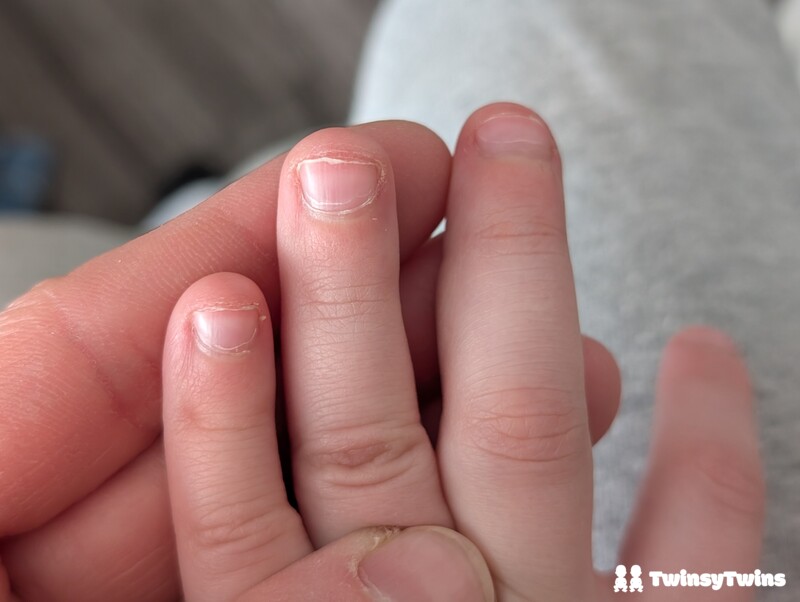
Nail biting is a behavioral response to a particular situation or trigger, so this sort of unconscious habit is actually easier to break if you remove the associated trigger(s) or introduce helpful reminders or distractions (like a tactile fidget toy or some Play-Doh to keep their hands busy) to stop the biting or replace it with a different activity, depending on how young your nail-biters are.
If they're old enough, you can also try positive reinforcement when you notice they're not biting their nails.
If your child lets their nails grow out before chomping them, try to keep their nails trimmed and filed, so there's less temptation to bite them.
Or, if the habit has become a daily distraction, you can try putting bright stickers or Band-Aids on their fingernails to discourage nail biting.
If these options don't deter the unwanted activity, you can try applying an over-the-counter child-safe bitter nail polish.
This vegan one by Mavala has a harmless, unpleasant taste that acts as a deterrent. It goes on clear, plus it's safe to use on kids and adults.
When to talk to a doctor
Some habits go away without any intervention, but if your toddler has started biting their nails and can't stop, it can lead to infections or other health issues, like dental problems or nail growth deformities.
If that's the case, you'll want to bring up the issue with your family physician to see if you need further intervention to help them kick the habit.
Have your twins picked up any habits? What have you done to try to curb the activity? Or did they grow out of it on their own? Let us know in the Comments section below or connect with us on Instagram to share your thoughts!
Read more

Brushing Teeth Just Became a Breeze with This Smart Toothbrush for Kids
Oral health is so important, and forming good dental hygiene habits at an early age can give children a solid foundation for a lifetime of smiles. But, sometimes, getting your twins to brush their teeth can be like, well, pulling teeth. Not anymore. This smart toothbrush for kids, in a crowning achievement, just put a cap on the struggles that come with taking good care of our teeth...

Keeping Pearly Whites Pristine: Teaching Your Twins to Floss Their Teeth
Are you one of those people who takes pristine care of their pearly whites? Or are you one of those people who frantically flosses the morning before your dental check-up? Whichever camp you're in, it falls on you to help your little ones learn how to take good care of their teeth, including when they should learn about flossing. Introduce oral hygiene practices at an early age You...

What a Mess: How to Get Vaseline Out of Your Mischievous Toddler’s Hair
You never think it's going to happen to you—until it does. You're going about your day, doing an excellent job of keeping your twin toddlers alive and, hopefully, thriving, and you're pretty impressed with how things are going. At minimum, they're fed and as happy as any independent-but-not-yet-independent toddlers can be. And because they're playing, either independently or...

Give New Meaning to Drawing a Bath with These Water-Tinting Tablets
Sometimes, kids love hopping into the tub. Other times, they'd rather do anything else. And when you need to get two toddlers excited about bath time at the same time, it can be tricky. When you run into those tricky times, there's a quick and easy way to get your twins on board with bath time. Ask them what color they want the water to be, and watch them jump up and head toward the...